Opinion: Parenting ADHD

Full disclosure: If you’re one of those “ADHD doesn’t exist” people and you’re comfortable in that space, this blog (the whole thing, not just this post) is probably not for you.

With my house full of people at all hours of the day since the pandemic struck, I’ve been thinking a lot about my parenting toolbox. I recently read an article on the subject of parenting with ADHD on the ADDitude magazine website because I was feeling pretty inadequate. I forget things. I get impatient and lose my temper. Sometimes I lose track of time and end up in a hurry to get the kids out the door lest we miss an appointment, and then I lose my temper because: shoes, coat, shoes, mask, shoes, hair, seriously… shoes! My kids need me to serve as their personal assistant and life coach because they can’t always keep themselves on track… but I’m not so good at it either.

Anyway, studies show that moms with ADHD don’t exactly tick all the boxes for what is conventionally considered great parenting, but when we’re raising kids who also have ADHD, we tend to be more affectionate and compassionate than a neurotypical parent. That makes sense. We are better positioned to know what they’re working with. Also, that’s great news because, “research has shown that ADHD is more heritable than most other mental conditions, only slightly less so than height” according to the same article.

If you didn’t already know (or guess), many (if not all) of the brains in my house are on the ADHD train, mine and my partner’s included. The soon-to-be-eight-year-old struggles the most, and it is my parenting of him that particularly worries me.

I like the metaphor of “the ADHD train”. It works because ADHD often makes me feel like the world is flying by and I can only take in what’s outside my window… but it’s going by so fast that I can’t grasp it. It all feels like a disorganized blur, and I often miss important things as they pass. It’s stressful because I know I’m going to miss my stop if I can’t even tell what’s passing, and sometimes the stress of trying to see things out that window makes me moody. My bullet journal is like having a map with a list of the stops, so I know what to expect and what I need to do on this train. Meditation feels like taking a photo out the window. I can capture a moment in time and reflect on it and get a better idea of what’s going on in that moment, but it doesn’t mean things aren’t still a blur the rest of the time. My medication can help slow the train down for hours at a time so I can see more of what is happening outside. Maybe now I can see that the green blur is made up of trees and fields, but I still can’t see all the details.

Nothing I’ve tried has been completely effective or fool-proof but that’s okay. It’s still far better than it could be.

I look back on my childhood and remember teachers seeing my high test scores and low classwork scores and asking me, “why don’t you just try harder?” I heard my mom tell stories of my dad being upset that my sister learned the alphabet so much faster than me. He couldn’t see that it was because I wouldn’t sit still and “pay attention”. I didn’t get to have a job as a teenager because my mom was worried about my grades. When I told my dad I couldn’t concentrate on my homework, he insisted I was just making excuses because the house was definitely quieter than my school, where I was seemingly able to get things done. It all came together to convince me that I must be just as well-equipped for compulsory school (and life) as everyone else… I just needed to try harder, or figure out what other people were doing differently.

Metaphorically, I thought everyone was on the same train, going the same speed, taking in information through the same window, but they had figured out some trick that I hadn’t.

That put a lot of pressure on me. I wanted to do better, but I couldn’t remember to bring my homework home once it went into my locker. If it stayed in my backpack, I couldn’t remember that it was there. I’d have every intention of completing it when I received it, but even if it did make it to my desk, I’d get distracted by cleaning my desk, then my room, then taking a shower, then… what was I supposed to be doing?

My two diagnosed children are both in elementary school. They don’t have lockers in which to lose their homework. They’re in a Montessori, where I thought they’d have a bit more flexibility to be themselves. Still, I see the struggles cropping up. They repeatedly impulsively say or do things that alienate them or get them in trouble. Sometimes they hyper-focus on one task for most of the day and the teacher can’t get them to do anything else. My eleven-year-old (M) is convinced she’s bad at math, but the time I’ve spent with her this year has shown me that she’s exactly where she should be in terms of skills, and even enjoys it. She just can’t stay on task long enough to work out a word problem or do long division without reminders.

It’s like she’s staring out the train window and being asked to describe the houses in the last town it passed through instead of watching the present scenery.

My eight-year-old (E) has tried a medication, but we felt that he was struggling even more than when he was un-medicated. I think that might have been because the chemicals were wearing off by the time he got home. Now, he’s in play therapy, where his therapist is trying to use the relaxed environment to help him build coping skills and social skills. M is receiving services through school. She sees an occupational therapist and also has a special social-emotional learning session once per week. I’ve seen both of them improve significantly in their self-confidence and problem-solving this year.

They basically have a team of people whose job it is to teach them which parts of the blur out the window are important to take note of, so they know where they are.

I wasn’t diagnosed until I was 30. It’s been a few years and I’m still learning new things about my brain. Sometimes I come across articles or videos that connect yet another part of my personality to my ADHD and they make me feel less alone. Recently, I learned that people with ADHD tend to have a poor working concept of object perminance. The person in the video explained that this is why they can’t put their vegetables in the crisper drawer: if you can’t see it, it isn’t there. You’ll never think about it. It’ll all just mold, forgotten in the darkness. It’s an affect of our poor short-term memory. I do things like this many times every day.

I try to get my kids outside, where things are happening at a slower pace and nothing is demanding their attention. Bonus: in a sufficiently large outdoor space, they can be as loud as they want, run as fast as they want, climb anything they can get a foothold on, get dirty, build huge things, and generally not face any consequences! They also get a little chunk of screen time every day (provided they’ve finished their chores) because I know that they crave dopamine and Minecraft and Castle Crashers and videos about sharks feel good. Chores come first, though, because they also need to be encouraged to complete tasks they aren’t interested in, like folding laundry and cleaning their bathroom. That’s part of life, and we can’t be functional adults if we don’t learn to power our way through tedious tasks sometimes.

Our pandemic homeschool structure was built to work for them, too. Summer was an opportunity for me to research and plan for this year, so I know what goals they should be reaching. I used that information to create charts with days of the week across the top and subjects down the side. At the bottom, there’s a note explaining that they need to do an activity in each subject at least twice in a week. They check with me to see if the activity they want to do will count for a subject, and when they’ve finished an activity they check a box on the chart with a dry erase marker. They can see what is complete and what still needs doing. They also get that satisfaction that comes with ticking something off of a list and seeing all those tick marks piling up. If they can’t come up with an acceptable activity, I can use the chart to find one for them. E, in second grade this year, relies pretty heavily on my help coming up with lessons. M, a fifth-grader, still wants help sometimes but often comes up with her own ideas for science and world studies.

Honestly, I don’t think of the things we do as being very different from what any parent might do for their kids. We have laminated lists of things they must do before bed, before school, and before they can earn screen time. We have a structured, but reasonably flexible schedule. We have a routine of fruits with lunch and vegetables with dinner, so they know what to expect. Reading is encouraged, but not during meals. Before the pandemic, we required that each kid choose and regularly attend one physical activity class (it was swimming for M and E, dance for the older two).

There’s a lot of impulsive breaking of rules and poor decision making. E has cut a single chunk of his hair without thinking about it on multiple occasions, then panicked as soon as he realized what he did. M has broken her glasses out of anger twice. E runs down the hallway most times even though I’ve tried everything I can think of (short of trip wires) to get him to stop. M frequently loses all track of time and stays up far too late reading if we don’t remind her to go to bed. E can’t seem to help but interrupt, even if what you’re saying is the answer to his previous question or you’re currently telling him to stop interrupting. M goes through periods of sneaking desserts from the kitchen and getting caught because the wrappers are still in her bed.

It’s frustrating, but I understand it, and knowing that we’re all on the same train makes a huge difference for how I respond. “Take a breath and then we’ll talk.” “Slow down. Let’s think about this.” “What do you think went wrong?” “I can wait until you’re ready to talk.” But sometimes I still find myself saying things like, “pay attention” and “try harder”. I just try to keep them light-hearted and in the context of my continued patience and assistance. I can’t say I’m not guilty of snapping from time to time. I’m human and I get exhausted and moody and reach my limits like anyone else. I just hope I’m giving them a better chance of developing a healthy relationship with their challenges earlier than I did.
But Why?

I want to do a bit of a deep dive into why I’m doing all of this. I want you to know, and I also want to be able to look back on this when I’m really questioning myself.

I wrote those first two sentences in March, then I tucked this draft away into the dusty recesses of the internet and probably didn’t even look at it again until today… Friday, December 18. It probably would have been a great exercise. I certainly had good, productive, self-aware intentions. Self-care is hard.

Remember March? People in the US were already getting sick, we were all starting to reconsider travel, but we really didn’t know what was coming. Spring break was extended and extended again before we were finally told we wouldn’t be returning to school buildings. Back then, I had decided I would be distancing my family from this remote school mess and jumping straight back into homeschooling my four kids, but I hadn’t really started yet. It had been more than a month since I unwittingly accepted my place in the environmental science masters cohort at UC Denver. I hadn’t started that yet either. I had done some frantic internet searching to see if anyone else had anything to say about digging into grad school while guiding a herd of children through their own education. Mainly, the internet doesn’t recommend it. I just didn’t feel like I had a justifiable choice.

The biggest problem with remote learning is that four out of the six of us have been diagnosed with ADHD, and the other two probably could be. Sitting in front of a computer all day (in the case of the twins) or even for an hour-long block (the Montessori version) is not going to serve us well when we’re trying to absorb new information. My classes are also virtual, but I’m in my 30’s and I’ve collected a lot of coping mechanisms over the years. I knit and fidget and take notes during meetings to maintain focus. The twins are starting to learn those skills, but the younger two are new to the game. So, our experimental first week following the Montessori’s lead didn’t go well.

It was full of alarms on my phone to help me get them to their virtual lessons, them dancing around in front of laptops and/or doing anything and everything to avoid being in front of the camera, me asking what the lesson was about and whether there was follow-up work to be done, and them… not knowing. There were innumerable technical difficulties. Often the teachers couldn’t help because they weren’t familiar with how the software functions in different browsers or on different operating systems. I might not even know something went wrong because of course, they have no incentive to tell me they need help if they’d rather not even attend the lessons. All the while, I was also trying to orchestrate middle school from scratch.

Believe it or not, it was harder to fully homeschool only two of my kids than it has been to include them all. I spent a portion of the summer drawing up basic curriculum outlines for all four kids, just in case, and with the hope that I wouldn’t need all of them. I found resources and made important decisions in advance. So, when I told the Montessori that we wouldn’t be attending lessons, I was already prepared to end up completely in charge. The two younger kids now check in to the virtual classroom every day to maintain attendance, but most of their work is on paper and is assigned by me. I try to follow along with the topics being discussed by their classmates, but I often don’t even know what those are because the teachers talk to the students in the meetings we don’t attend and then don’t share any of that with us (in spite of agreeing to support our approach). Fortunately, that’s fine because I already have a trajectory set for my kids and high expectations.

M is 11 years old, autistic, and has ADHD. She blows me away regularly. She programs and writes impressive fiction. She reads like she breathes (but only after an epic struggle to get her to even try in kindergarten and first grade). She doesn’t like to look at people’s faces and doesn’t like to feel like she’s being watched. Sometimes she gets overwhelmed by things she might have previously been able to tolerate and she yells or breaks things (most recently, she broke her glasses out of anger, for the second time). You can see how virtual classrooms would be difficult for her, and subsequently for me.

E is about to be eight. He seems to be the recipient of two helpings of ADHD: one from each parent. It seems like he learns new physical skills in minutes. Within a day of receiving a jump rope, he had it almost entirely figured out. He also reads as though his life depends on it, but only when everyone else is quiet and boring. In a group (like at the dinner table) he seems to become so preoccupied with filling all silences (or talking over the conversation) with loud, fictional stories, singing, and wild gesticulations, that he loses all awareness of the task at hand. When he was physically attending school, he often sat in the library corner of the classroom and didn’t accomplish anything but reading, seemingly because he was overwhelmed by his inability to focus. In virtual school, this results in him hiding behind the laptop screen, covering his ears.

I’ve decided not to accept that. I’ve decided to do what I can to support my kids while they find their way through this and come out the other end stronger. In our case, that means avoiding the virtual classroom.

I have two teenagers who were enrolled in the local public middle school and two Montessori elementary kids. The middle school repeatedly disappointed me with their sheer inability to come up with a plan, and then again by coming up with an unreasonable one. I gave up on that situation pretty early and withdrew the twin teens entirely. The Montessori took some time to come up with a solution, but I thought it was well thought out and probably the best compromise possible, so we tried it.

I’m in school full time myself because I love education, and I want to contribute knowledge to the world. In my first semester, I managed to earn A’s. My kids are progressing through the expected curriculum at an acceptable (and in some cases outstanding) rate. They’re even learning a little self-direction. All signs suggest that everything is fine, and I wasn’t even taking meds. I am quite happy with all of our work so far, but it is rather stressful. It’s a lot to juggle, and I frequently find myself worrying that I’ve missed something critical or failed us in some way. After all, in addition to all of this, I also have to be their mom. I have to provide them with healthy food, clothes, emotional support, social and moral guidance, and good examples. Since there seem to be enough of them that at least one of them is complaining at any given time, it’s hard to know if I’m succeeding. Still, I think I’m doing the right thing.

Next semester, I’m taking more classes. I work as a research assistant and I’m already beginning work on my thesis. Next semester, the twins will still be homeschooled and the Montessori still isn’t going back to in-person classes. I’ll still be in charge of their education. I’m endlessly thankful for help from my partner, of course, and the fact that his transition to working from home was practically seamless. He steps in during his breaks to help answer questions when I’m already busy. He also does a lot of the cooking at dinner time and half of the grocery shopping. Probably most importantly, though, he emotionally supports me, believes in me, and listens to me (even when I’ve just interrupted his reading).

Also, I’ve just started seeing a new psychiatrist and taking Adderall again. I hope that winter break will be a good proving ground for the prescription so I can take on next semester with more confidence and less stress. We’ll see.


The COVID Remodel

Everyone’s doing DIY projects while they’re stuck at home, staring at the ugly trim in the living room, or the messy closet floor. I’ve been knitting and crocheting dish rags and blankets and I just started knitting what will hopefully turn out to be my first sweater. At the same time, we’ve got a contractor (just one) coming to our house most days to work on several projects we’ve been meaning to throw money at for years.

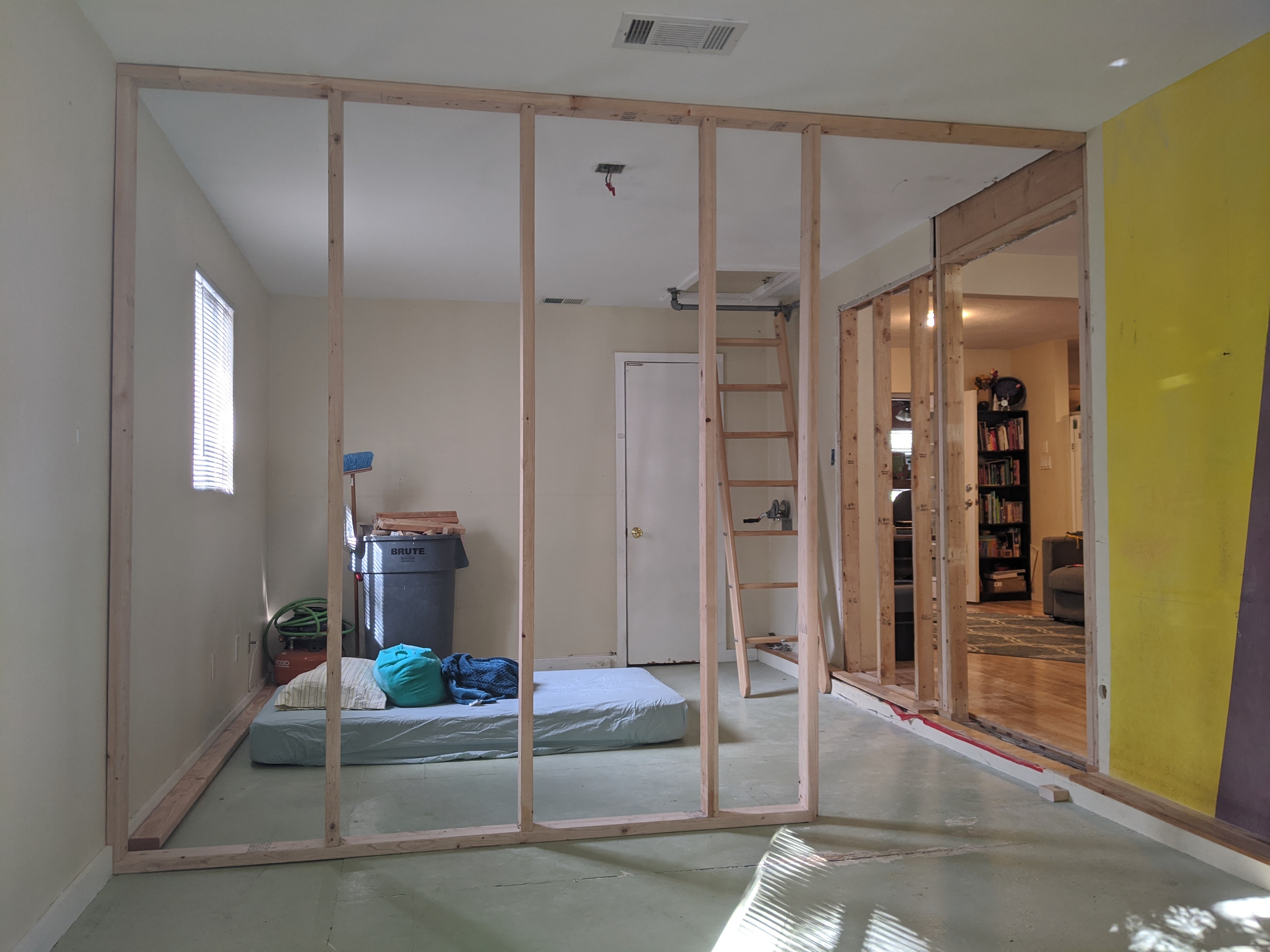
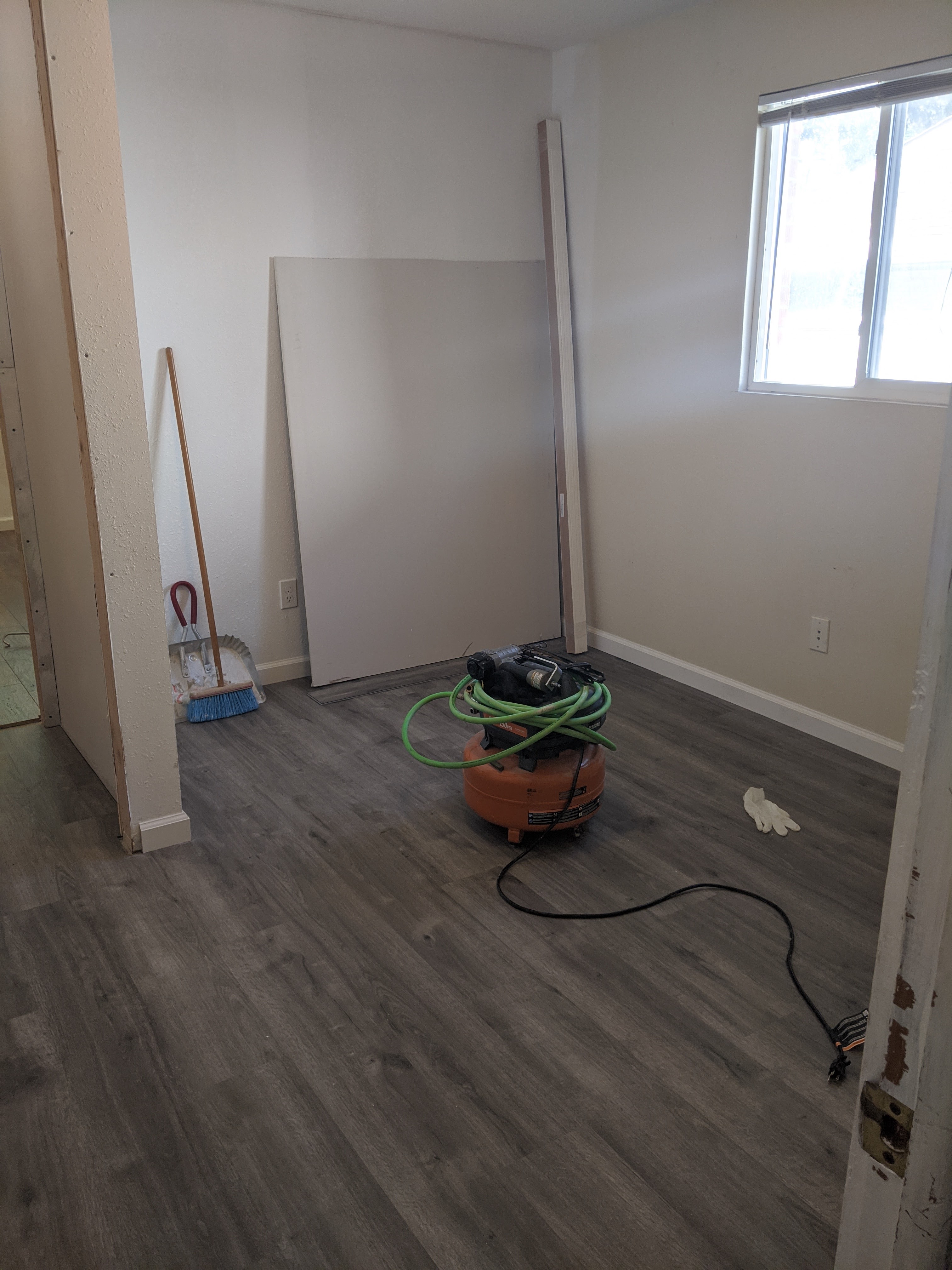
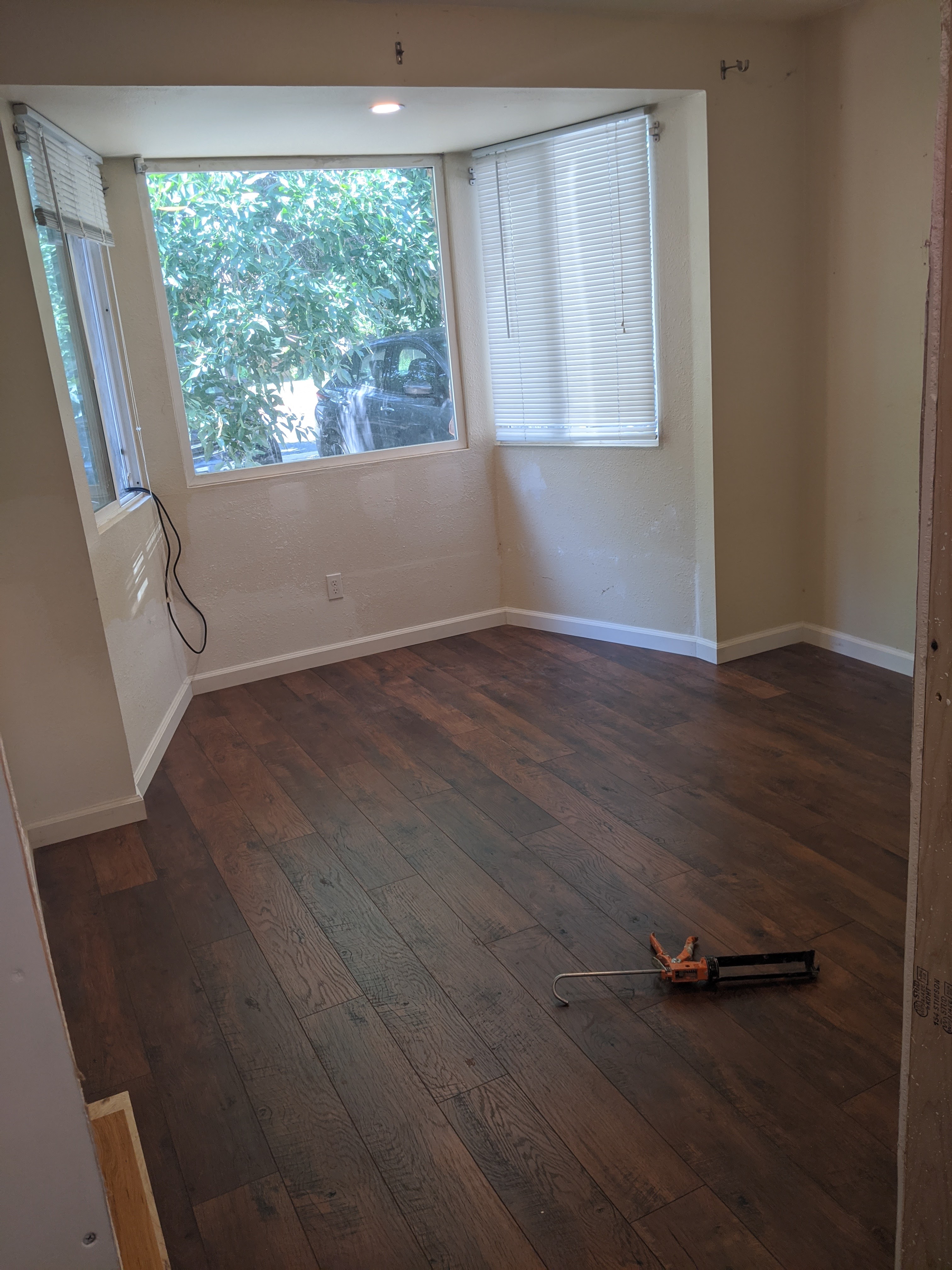
  1. Turning the twins’ room into two rooms. They’ve been wanting more personalized spaces and more privacy for a while. This year, for their birthday (in February) we told them we’d set aside time and money to make that happen. COVID made it rather difficult, but we found a guy who was willing to do it all on his own, and he’s doing a great job. We’re waiting on custom door delivery and a permit inspection and we’re basically done with this one.
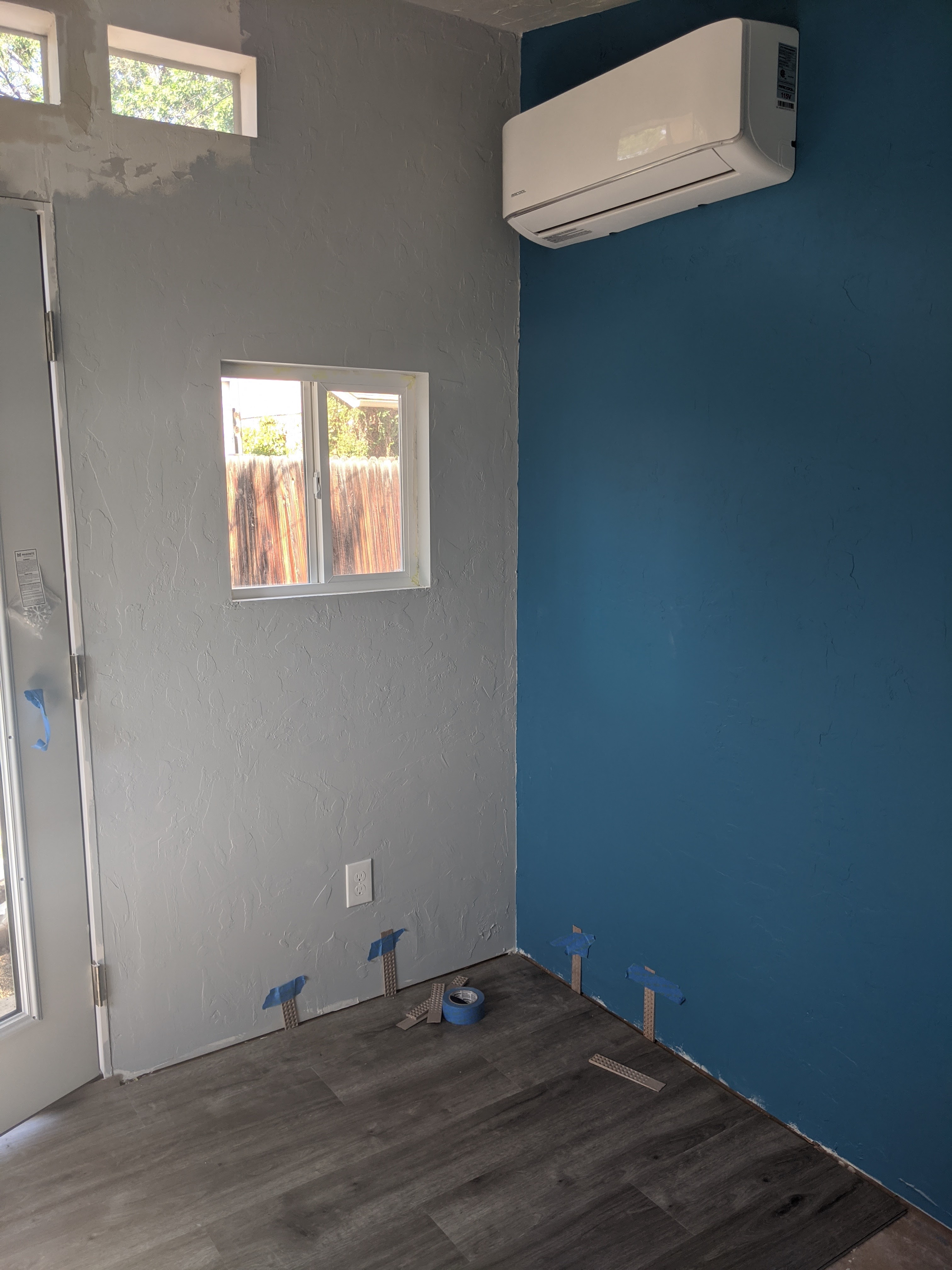
  2. Building an office in the back yard. This one has also been on the docket since before the pandemic. In this case, the project got fast-tracked because my partner is now working from home full-time and indefinitely. Even after the disease is under control, he hopes to still work from home multiple days per week. We’ve managed to finish out a nice Tuff shed well enough that he can work there instead of our bedroom. Which is also an improvement for me, because his bedroom office situation made cleaning the bedroom rather difficult for me. The new space does still need trim and enough contents to make it less echo-prone though.
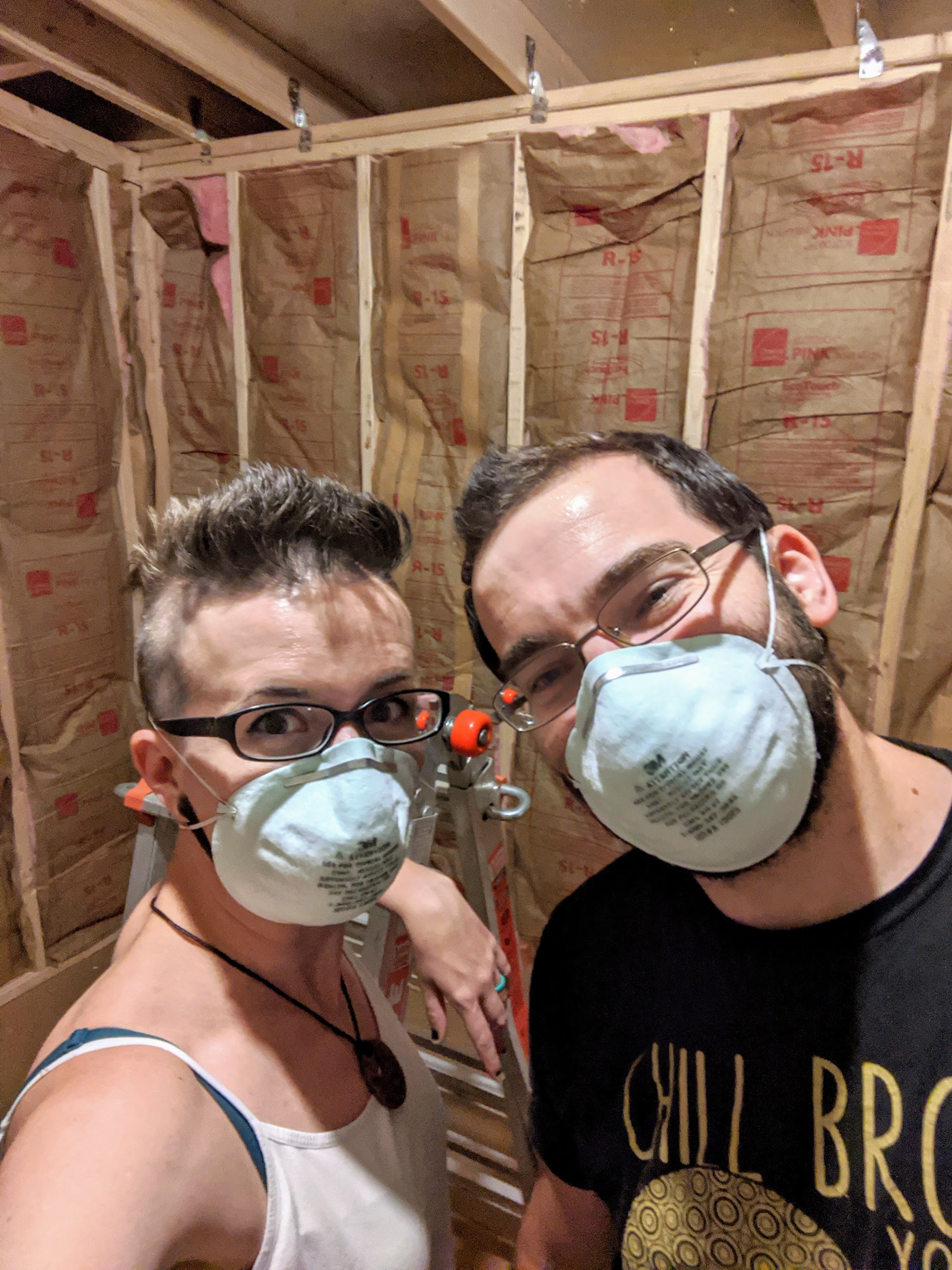
  3. Getting rid of the mold in the master bed/bath. Obviously, this has been a real problem for as long as it has been happening. The base of the shower leaked into the wall between the master bath and master bedroom and caused substantial damage. We need to replace the drywall, trim, carpet, and who knows what else. Plus, we’d like to do a full bathroom remodel so we can replace the base of the shower with something less likely to crack, and then fit the rest of the bathroom to match. This is the next big thing on the list. We just need to get the twins moved back into their spaces before we move out of ours.

The contractor has been fully responsible for the twins’ room construction, while my partner and I did most of the work on converting the shed, except for electrical. We’re thinking of calling it “the Shab”, as a nod to Andy Weir’s The Martian. Mark Watney calls the martian habitat “the Hab”, but ours is a shed. So it’s a Shab.

We haven’t done anything about the mold yet. We live in Colorado, where the air is super dry, so as long as we keep the shower from further contributing to the moisture in that wall, it should be pretty dormant. We did fill the cracks with silicone for now, but I’m really looking forward to getting rid of the unsightly mess. It’s next on the list.

We’ve lived in this house for almost 8 years at this point. It’s a post-war shoebox of a house. As you might expect, many things have cracked and suffered over the years. I’m just glad we’re finally getting around to fixing some of the worst of it.

Please Give Me More Responsibilities

Remote schooling isn’t working for us. I’m sure it’s not working for a lot of you. The schedules change, we’re not sure which zoom sessions our kids are supposed to show up for and which are optional, and sometimes the teachers are asking our kids to do things they can’t even do because it doesn’t work on a chromebook. Neither of the remote-schoolers are handling the time spent staring at a screen well at all. Not to mention, it’s incredibly stressful (when it’s even possible) to manage two different remote-learning schedules while also trying to homeschool my teenagers and keep up with my graduate school program.

We’ve decided we’d rather just homeschool all of them. But it’s not that easy. The two younger kids are enrolled in a charter school, and Miss, who is starting 5th grade this year, just got an IEP worked out. She is Autistic. She’s also gifted in areas related to language. We’re only just starting to officially delineate her needs with this school, and if we officially pull her out for the duration of the pandemic, we might lose all of that because she might not get back in when it’s over.

We’re trying to contact various people at the charter school to determine if we can homeschool without completely disassociating with them. It’s not that we don’t like their school… okay, this is going to sound a lot like a break-up stereotype, but…

Charter school, I just want you to know: It’s not you, it’s me.

How do you even achieve Montessori education via zoom? I get it. It’s basically impossible. I sent my kids to school there so they could have a more hands-on, active, whole-child education. COVID kinda wrecked it. It’s nobody’s fault. I just don’t think these zoom meetings and weird schedules and confusing/impossible instructions (plus me frantically trying to piece everything together for everyone) are good for my kids.

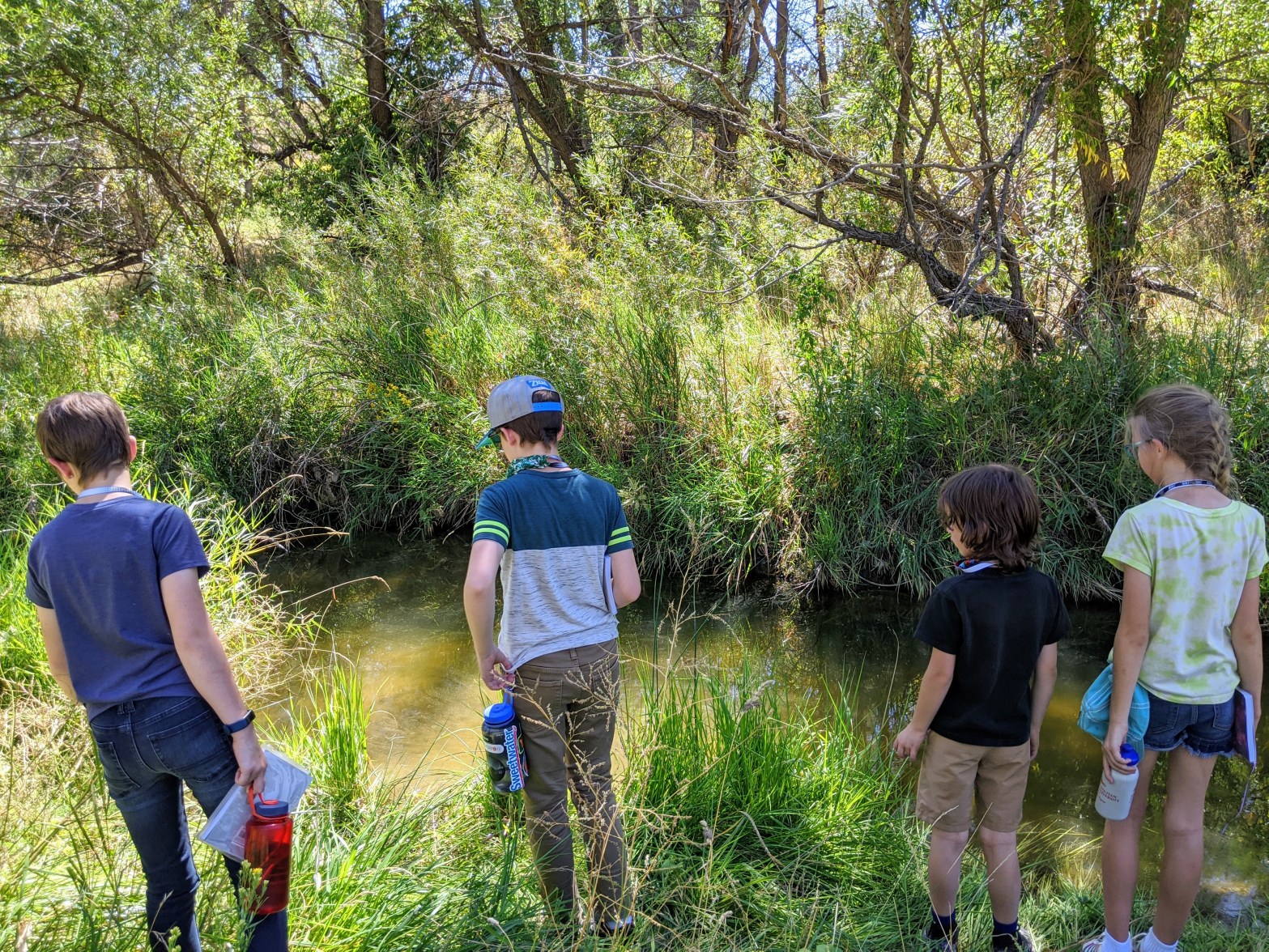
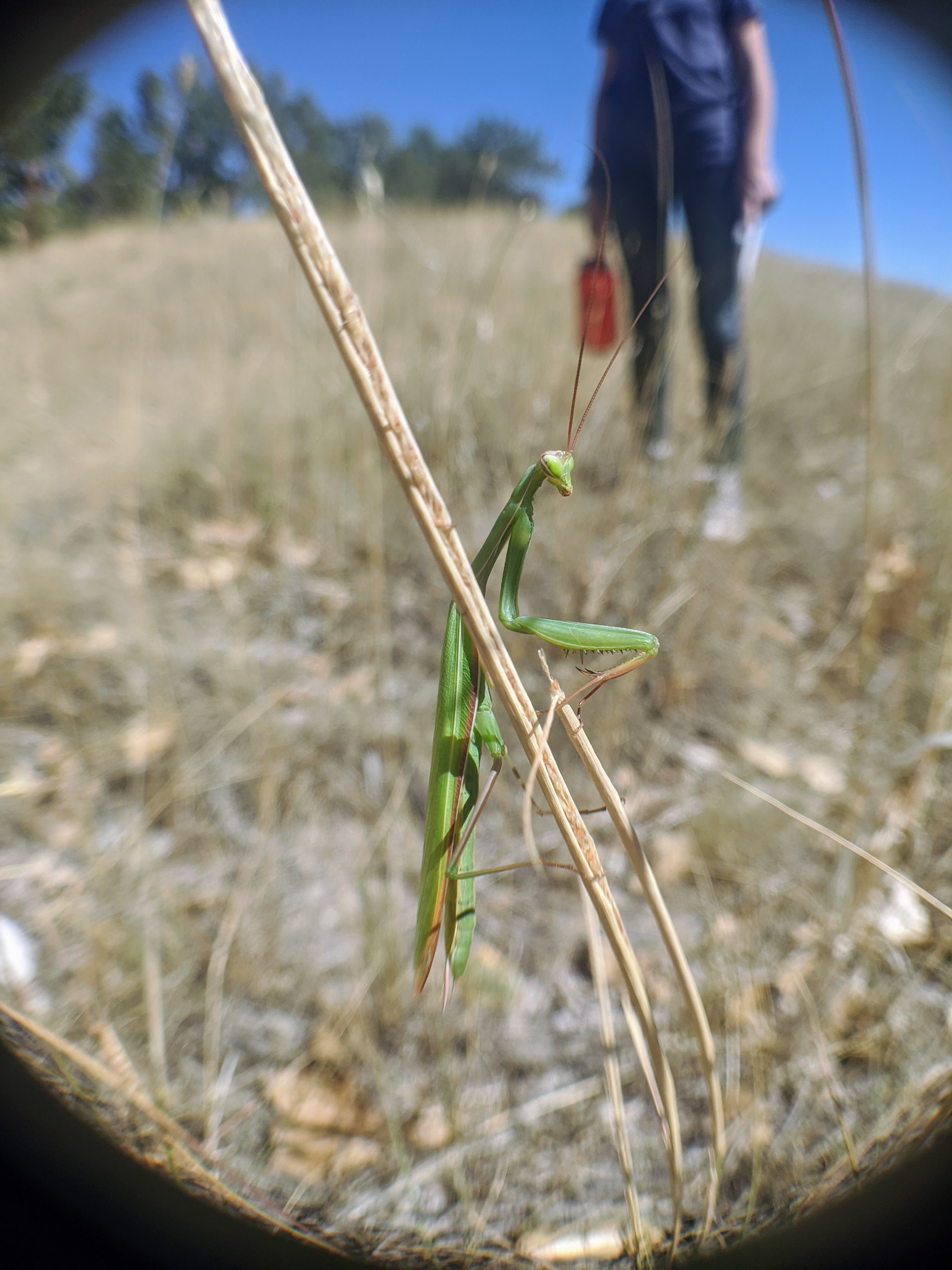
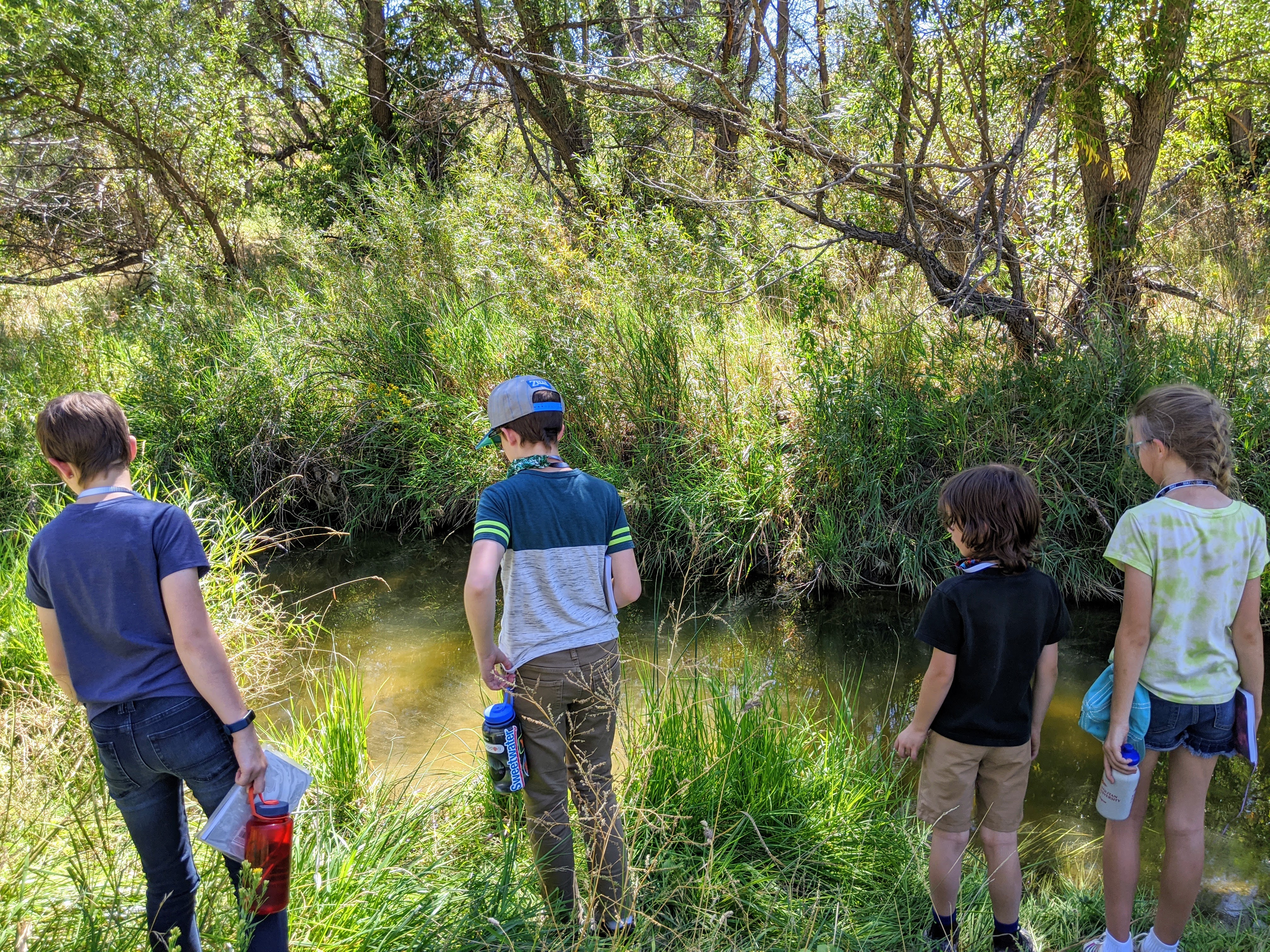
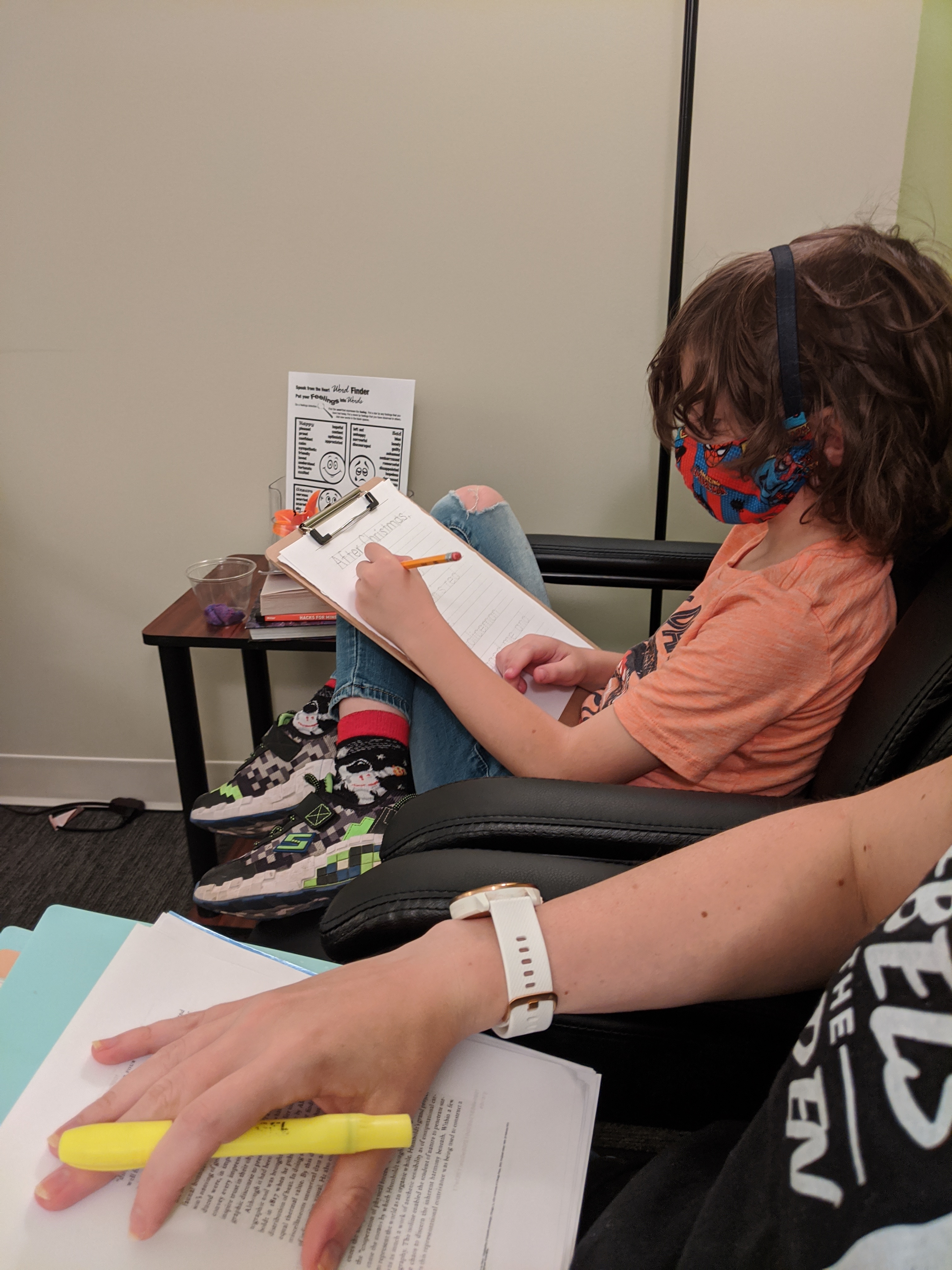
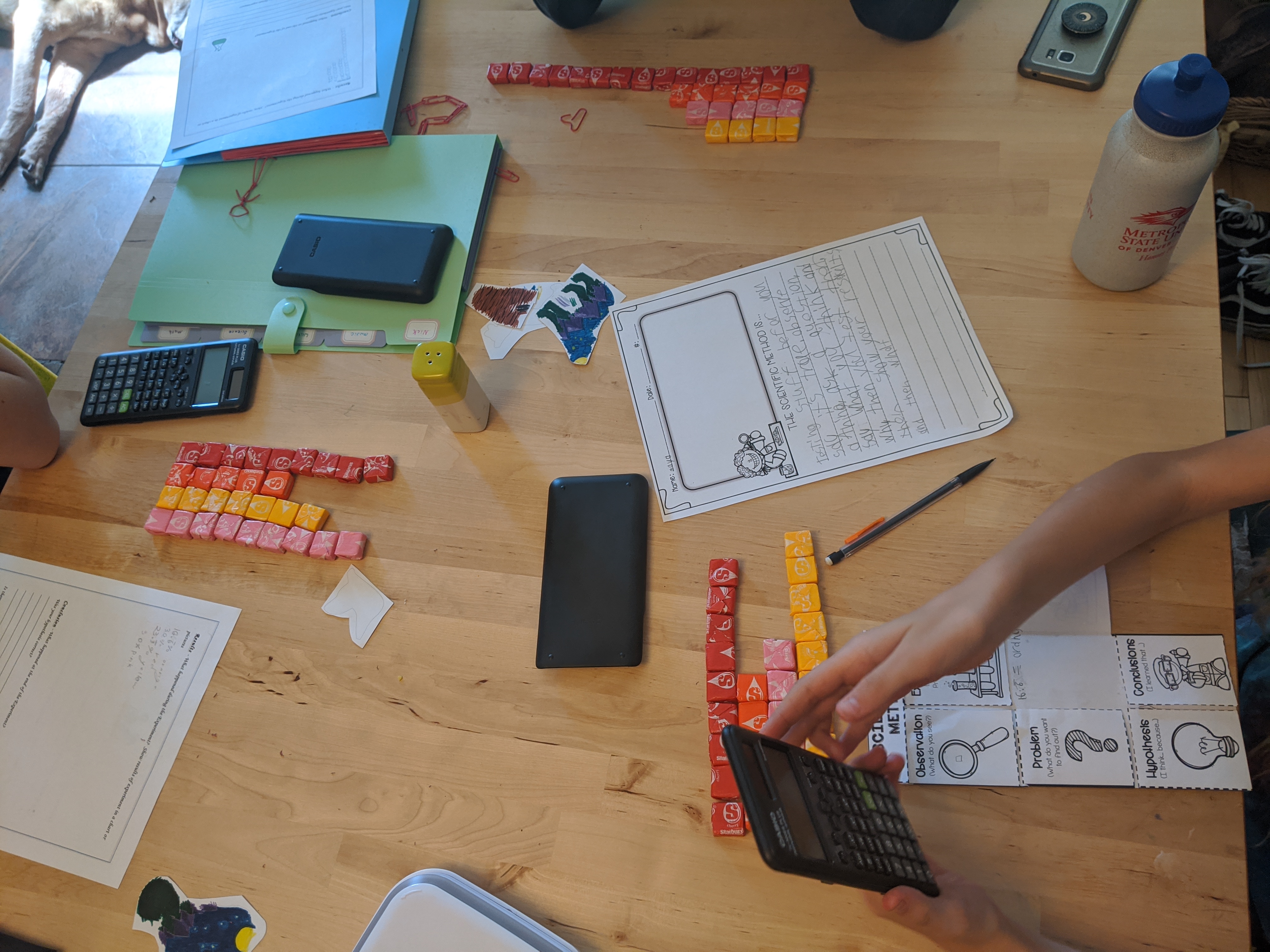
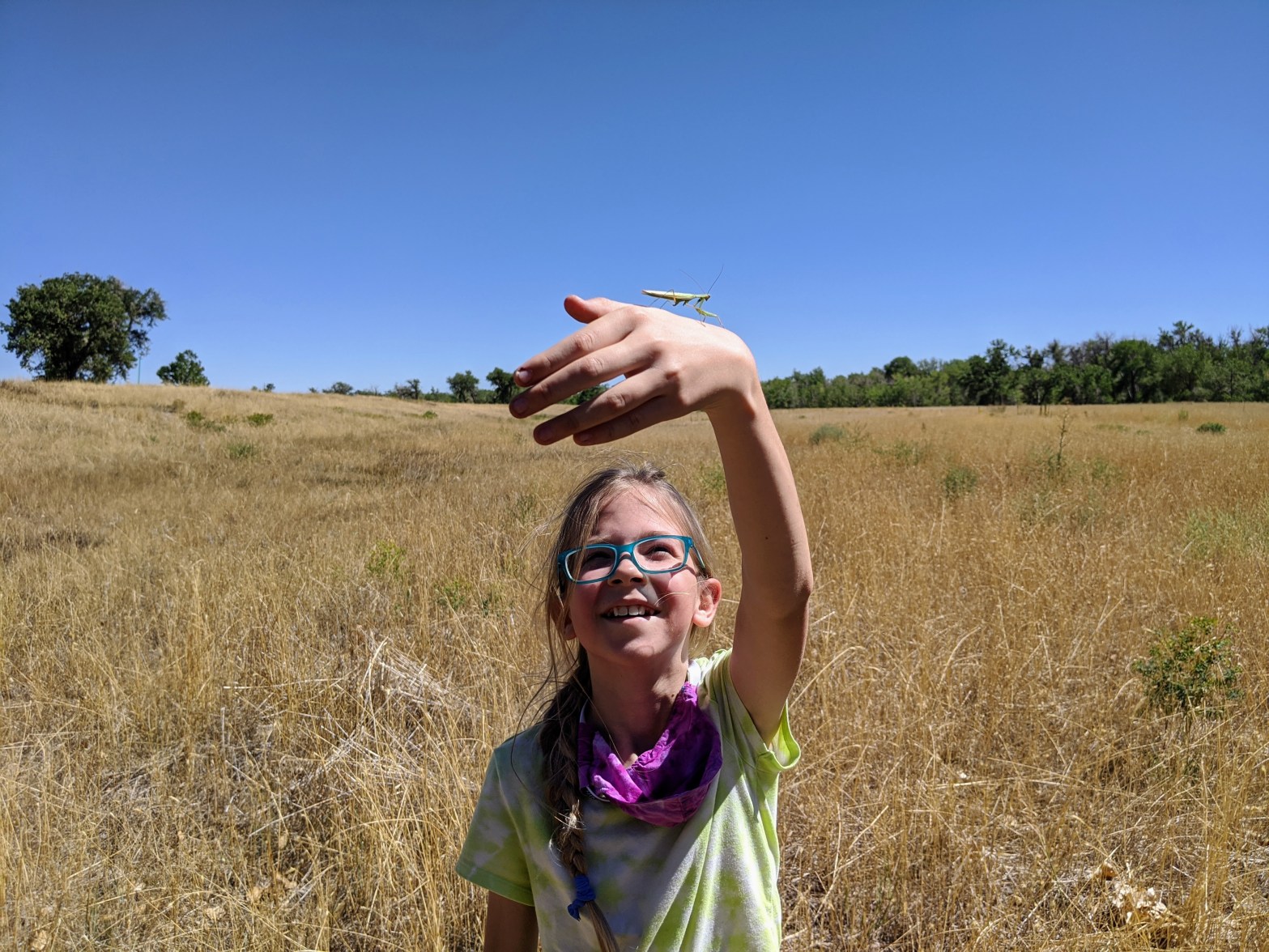
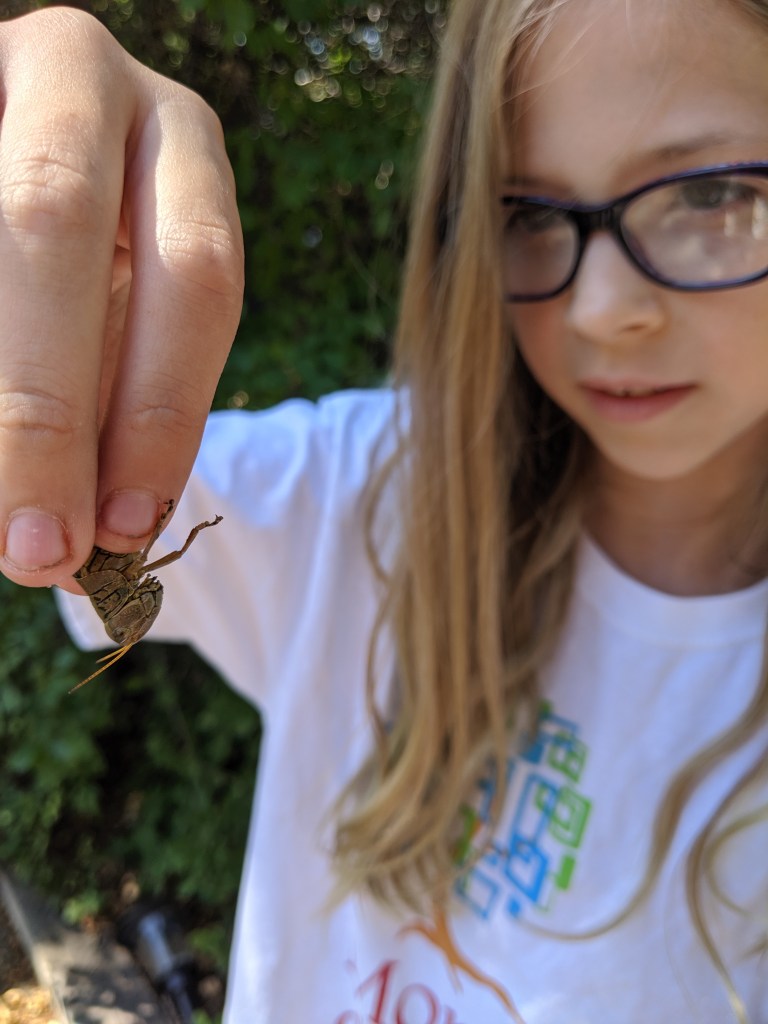
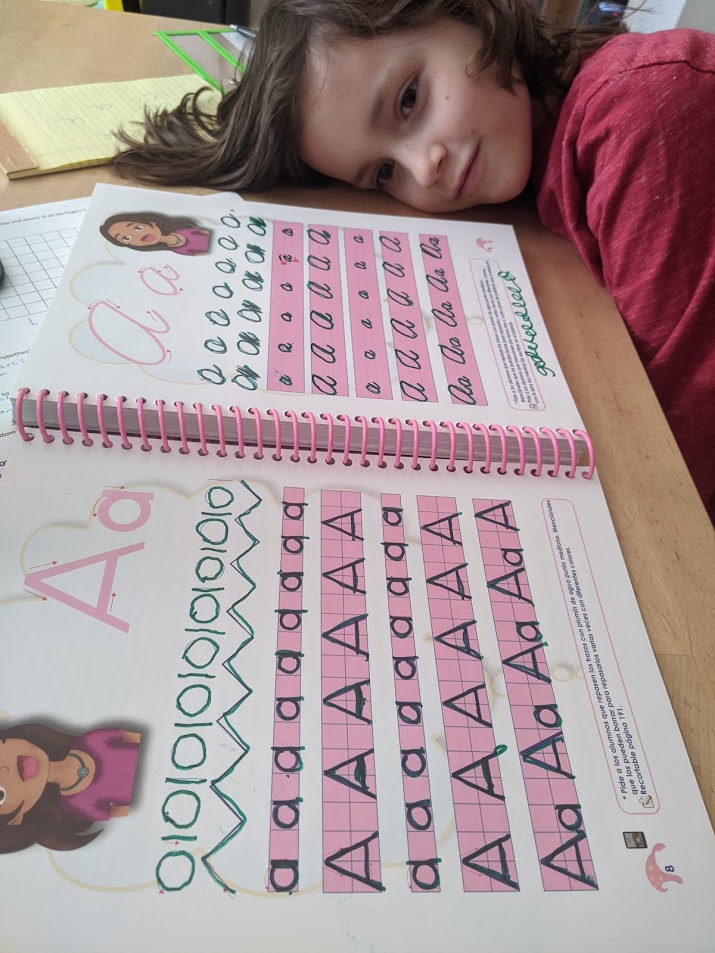
So, instead, I’m taking over. Last week, we did a basic exercise in hypothesis forming and taking an analyzing samples using a giant bag of starbursts. Monday, we did handwriting worksheets in the waiting room of their therapist’s office and went to the library to pick books on a topic of interest (Greek mythology, Roman mythology, dragon history and folklore, and hurricanes). Tuesday, we did an activity centered on writing and following instructions which involved one kid building a simple Lego structure and then explaining how to build it to another kid. Yesterday, we went for a little hike and observed and photographed insects, pressed plants, and took notes on what we saw. Today, I did my own homework while my kids did various assignments at the same table. Fridays are for Pathfinder: mild math, cooperation, problem-solving, writing, reading, using a reference book, and FUN!

They’re weaving, knitting, crocheting, painting, drawing, playing violin and piano, reading for fun and for edification, helping each other, writing elaborate backstories for their pathfinder characters, and playing Don’t worry. We’re getting plenty of math done, too. I love math just enough to annoy the kids a little bit. It just doesn’t make for good pictures or stories.

I’m loving this. It works so much better than any remote-school option I’ve heard of. The only thing I worry about is the seclusion. I know that’s a contentious point for homeschoolers (don’t shoot me!). I’ve homeschooled pre-pandemic, too. Seclusion was never a problem before. The kids were in swim lessons, dance lessons, summer camps, gymnastics, on soccer teams. They were “socialized”. But the pandemic really limits what’s possible in that area, and choosing to homeschool removes even the shoddy semblance of socialization that comes with zoom meetings.

We’re trying to patch that with a tiny homeschool coop which includes just our family (with four kids) and one other family (with two kids). We will be meeting at least once a week for academics, and playing Pathfinder together on Fridays. But the other family’s kids are in the age range of my younger to, so the twins are still feeling pretty lonely. I’m still not really sure how to solve that.

And, due to a mix of homeschool and home remodeling, my house is an enormous mess and in spite of my many efforts to manage it. Phyllis Diller once said, “Cleaning your house while your kids are still growing is like shoveling the walk before it stops snowing.” She probably knew. She had five kids. I’m just struggling to emotionally accept what my logical mind already knows: A clean house is not as important as all of my other goals right now.

Homeschooling Teenagers

For the first time that I know of, homeschooling feels popular. Parents are realizing that they were doing a lot of work at the end of the spring semester and they are seeing that they can probably handle all of the work. While I wouldn’t want to discredit teachers for the education they have and the work they do, because they do provide an important service that I would hate to see disappear, I actually think that many parents are going to be just fine striking out on their own. They just needed a push (and some uncomfortably forced free time).

For my part, I will be homeschooling the twins, who are to be eighth graders, but remote-schooling the two elementary kiddos with hopes of being able to send them into the classroom when that becomes safer. I have no experience homeschooling middle schoolers. My kids were homeschooled when I started my bachelors degree in 2014, and I continued to educate some or all of them while I took classes, for a few years.

For me, elementary education came naturally. We grew stuff in the garden, went for nature walks, baked and cooked and sewed together, and occasionally did worksheets to encourage basic writing, spelling and math concepts. They were also in group activities like gymnastics and swimming lessons or on a soccer team. The twins took guitar lessons for a time. At that age, the education they need is everywhere. I don’t really know how to do middle school.

I also don’t know how to homeschool some, but not all, of my kids. I will have to manage the twins’ education on my own, which has already required a lot of planning and building strategies, trajectories and stores of materials, while also navigating the complexities of cooperating with the younger kids’ school. The Montessori has responded to feedback from parents who participated in remote schooling at the end of last year by adding more live video sessions with teachers and, supposedly, reducing the amount of time spent doing actual school work on a screen. They also said that, in response to the frustrations expressed by parents, they’re going to try to devise a schedule which avoids multiple students living in the same home being involved in live sessions at the same time. Which, for me, just means I’ll be busy with live sessions twice as often as a parent with only one Montessori kid. When am I working with the twins?

On top of that, I was planning on trying to work together with our best friend family, who are also homeschooling this year. We thought we would get together a few times a week to have our similarly aged kids work in groups on things, and play a table top role playing game for social skills and math practice on Fridays. But it takes about half an hour to drive to their place, and the two elementary-aged kids are expected to each have multiple live video sessions throughout the day. Each one should be about 15 minutes, and I don’t know how many (they just said multiple) or when, only that the school is trying to avoid overlaps within households. So, if I end up with two 15-minute live sessions (one per kid) to shepherd every hour, when am I driving?

It is known: I panic, especially when trying to plan for unknowns. I suppose I ought to just wait and see how it all falls together (or apart?). But the Montessori kids are supposed to start in a week and I still don’t know what that’s going to mean for our family. So, I feel like it is not unreasonable to be a little panicked. I can’t schedule appointments or plan our homeschool time slots. I’m trying to wait patiently, because I know the school has a lot to untangle, but I feel like I can’t start on any of my untangling until they finish theirs.

I do like the Montessori the kids belong to. It’s bilingual, and thoughtful, and they have been extremely helpful and supportive throughout our adventures with ADHD and ASD. It’s a charter school, and I don’t want to lose their spots there. At the moment, though… I wish I was just homeschooling all of them. It would be easier to navigate.

Damnit, COVID!

Opinion: Parenting Autism

My daughter is nearly eleven years old. I often call her Miss.

Miss was diagnosed with autism a year ago, and her school just performed the battery of tests required to build her an IEP. I’m sure it is a frustrating process, even in the best of times, but the remote administration due to COVID was a special kind of miserable for Miss. Plus, Miss belongs to a bilingual Montessori charter school and several staff members are not able to come back and must be replaced because of work visa troubles caused by the pandemic. So things are a little unsettled at the school, and Miss is looking at a year that will be weird whether she is able to go back to the classroom or not.

She isn’t great with new people. The struggle is reinforced from both sides. It takes Miss a long time to even want to get to know a new person (actually, I’m not sure she ever wants to), and since she doesn’t fit with most people’s understanding of ten-year-olds, it’s hard for them to make sense of her in the classroom. A new teacher being trained in her classroom once tried to enforce the same rules for Miss as for the other kids: no leaving the classroom. Her regular teachers and the office staff were all aware that sometimes Miss needs some quiet time and had established spaces she could hide to get away from all of the noise when she was upset (In the past, she had left the school building once and, on a separate occasion, hidden inside the building without telling anyone until they called the police and me). So, being confronted with a different set of rules caused her to panic and, having nothing else around her to take it out on, she took off her plastic-framed glasses and twisted them until they broke. I’ve had to replace her glasses a couple of times due to fits of frustration.

She’s smart. She writes and reads above her grade level and, though she doesn’t believe it, she’s pretty good at math. Her processing speed is remarkably slow, and she also has ADHD, so I imagine when she does multi-step math, she gets something like a “connection timed out” error. Her school refers to her as “2e” or “twice exceptional” because she is both gifted and challenged.

What I really want to talk about here is why I chose to pursue diagnosis and an IEP. After all, Miss is passable as neurotypical to the average person. She doesn’t really struggle academically to any unusual degree. She could have potentially made it all the way through compulsory school without all of this complicated, extra work. Actually, I wasn’t even convinced that her uniqueness was something to be concerned about until shortly before her testing began.

Before I explain my reasons, I want to be very clear: This is based on my experience, my daughter’s specific behaviors and needs, and our family’s structure and values. This is not meant to persuade you to do anything differently. What works for us may not be what works for you. Also, I have made no attempt to list all of my daughters’ symptoms or struggles. That would be difficult and potentially violate her privacy.

Knowing is half the battle. I wasn’t sure Miss was autistic. I had a feeling she might be, but my idea of what autism looked like was not fully formed yet. I, like many who haven’t been exposed to the varieties of the spectrum, thought my daughter didn’t have enough of the signs to even bother with testing. I had two kids before her, and another when she was three, and they are all very different. Miss just seemed to have a more troublesome brand of differentnness.

Let me give you some examples of what I mean when I say “troublesome”. Miss could not seem to learn phonics and reading from us. I don’t think she knew any sight words until well into first grade. That’s fine, but this was when I started to really notice that Miss would smile and giggle when we were frustrated. I even wondered if Miss was pretending in order to disappoint us because she thought it was funny. This also happened when she was on timeout (often for screaming, hitting, slamming doors). We would sit with her to talk about what happened and what should have happened, and she would describe her misbehavior with grins and sometimes even struggle to complete a sentence because of her laughter. Knowing what I know now, I wish I had reacted differently at the time, but it’s upsetting to watch someone smile and laugh while you express your dissatisfaction with their actions. Now, I know that Miss often smiles when she’s upset about something. She even smiles sometimes when she’s yelling at her little brother.

I made some realizations and arrived at improved methods of handing her uniqueness on my own, before her diagnosis. Her school did the same. They listed safe spaces for her to hide when upset, as I mentioned before, but they also invited her to lunch-bunch (a social skills group) and eventually created a nature group she could lead, so she could practice being in charge and getting to know others who shared her interests. Still, it was slow and difficult and I decided we needed help. We needed a professional opinion.

Her diagnosis has empowered me to advocate for her needs at her school. Instead of simply following along with their plans and attempts to accommodate her, I’ve requested meetings with her teachers when something goes wrong so we can talk about how to avoid it in the future. I probably could have done this before. Her school is very helpful. However, I still wasn’t sure Miss really needed that kind of support, I didn’t have the words to describe the ways in which she struggles, and it always felt like the teachers knew how to handle things better than I did.

I worried that labeling her uniqueness would upset her in some way. It seemed like it might be harmful to go through life thinking of yourself as clinically different from your peers. So far, that has not been the case. Knowing that she’s different seems to have liberated Miss. Up to this point, she had gone through life believing that she was essentially no different from everyone else. So why were some things so much more difficult for her? Why did people sometimes get angry when she smiled? Smiling is supposed to make people happy. Why doesn’t anyone else get so overwhelmed by the Montessori classroom noise that they feel like they need to escape? This is what I imagine she must have thought, anyhow.

I grew up with undiagnosed ADHD and spent most of my memorable childhood assuming we were all the same, and wondering why I couldn’t get the homework done (or even get it home), why I couldn’t remember to bring paper to class, and why the only way I could manage to be on time was to be early… when everyone else seemed to be dealing with things just fine. I figured I just needed to learn whatever coping mechanisms everyone else used.

Over the years, I did figure out a bunch of coping mechanisms, often involving externalizing obligations. Alarms, lists, a designated place to put my shoes, coat, clothes, backpack, and a set time specifically for checking my backpack contents before going to bed, and asking for help all became important contents of my tool box. Having built a robust system, I finally went back to school in my late 20’s and I had almost finished my bachelors degree when I found out that my versions of those coping mechanisms weren’t just normal things that everyone did in order to successfully navigate the world… that we weren’t all the same. I struggle with time management, organization, and memory tasks more than most.

Knowing that has opened the door to a community of ADHDers who understand. It has freed my mind. I worry less about why everything seems so difficult. Instead, I know that my brain just needs some help keeping on task. Caffeine, exercise, and taking breaks all help, but I can also try prescription medication and occupational therapy if I want. Knowing what class of brain I belong to also means I know what to type into a search engine when I’m looking for solutions to something I’m struggling with. How to take notes with ADHD. How to study with ADHD. How to be a better conversationalist… with ADHD.

So, this is what I’m hoping to offer Miss. Right now, I know that knowing what class of brain she belongs to helps me parent her more effectively (trying to improve all the time), but I think it also helps her understand that the same things that work for everyone else might not work for her, and that’s okay. She’s not alone. She has a vast, diverse, and interesting community. She can type “with autism” into the search engine and someone will have had the same question and probably found an answer she can try, because people like her are everywhere. She is a type of different that has a label. Avoiding the label doesn’t change that. It just makes it harder for her to approach her problems with the right tools and connect with other brains like hers.

For Miss, I needed a diagnosis to be sure. The diagnosis lead to conversations with her teachers, which lead to the process of creating an IEP. The diagnosis also came with a lot of parenting advice and solutions for problems I wouldn’t have found on my own. I don’t yet see how any of this could be worse than going on without knowing.

Juno’s Last July

I’m staring at a blank screen, unsure what to type, knowing that writing something about this is likely to help me close this chapter and move on in a healthy way. It’s unexpectedly difficult to know where to start, and I’m sure this won’t be my best writing.

My partner had Juno before he had me. She supported him through his most recent breakup, and kept him company when he was alone. She was there the first time I went to his apartment. He tried to get her to jump up in my lap, but I was wearing jean shorts and she scratched my thigh. At the time, I thought it might scar… now I’m a little sad it didn’t.

She accepted me as part of her life right away. She helped raise my dog, Eos, who I brought to her as a puppy. When my family lived with us, they brought home cats and Juno shared her favorite napping spots and even her water bowl with them. When they moved out, they got a little chihuahua mix and Juno got extremely excited to play with him whenever they brought him over.

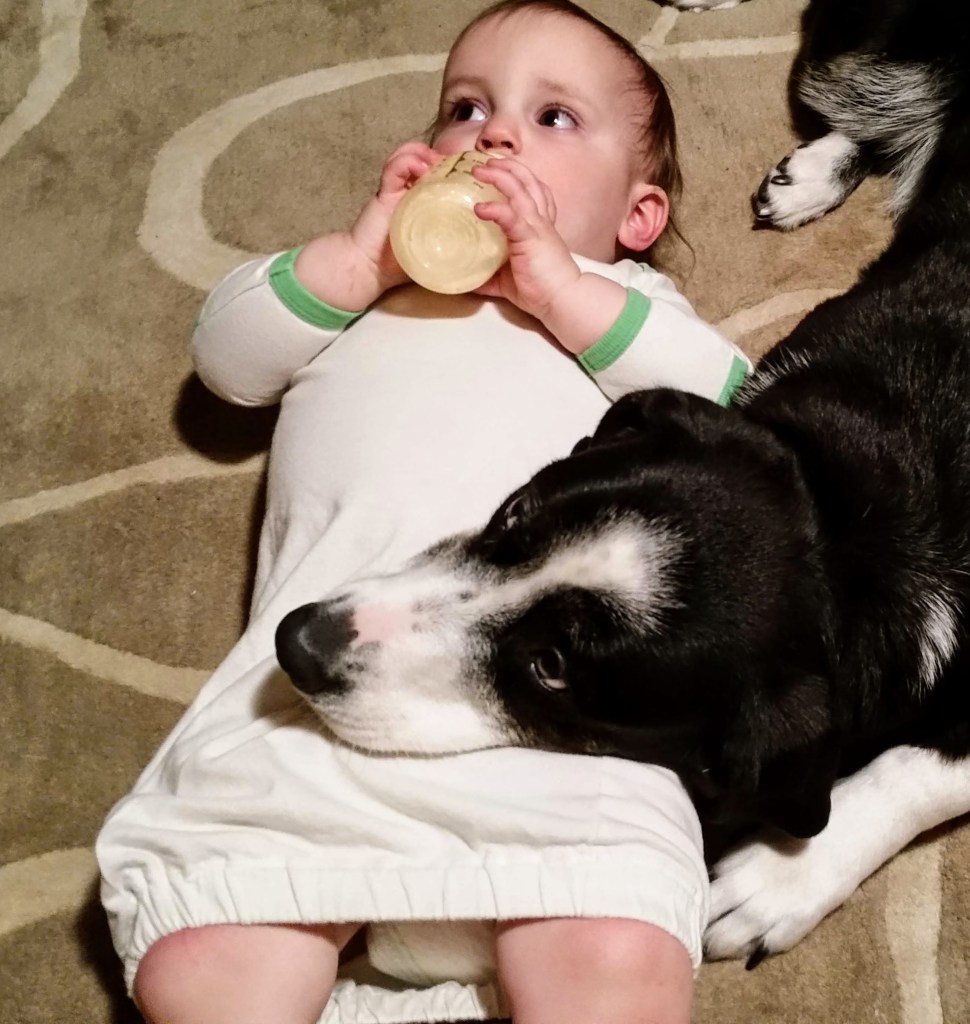
Then, there were the children. She loved them all. She preferentially slept on their things and they cuddled with her on the floor or on the couch. I don’t know if any of them remember life before she was around, and Cub came home from the hospital to a home she already occupied.

Almost nine years of my life were improved by Juno.

Tuesday, May 5, 2020 – Juno collapsed and went to the vet, where we found out she was seriously anemic. Subsequently, she was given a blood transfusion and was subject to a series of tests to ultimately determine that her anemia was not caused by any identifiable, treatable issue. They called it immune-mediated hemolytic anemia. Her immune system was destroying her own red blood cells. She was on a cocktail of medications to boost her cell production, suppress her immune system, and settle her stomach so she would still eat in spite of all of the drugs.

We were optimistic.

Friday, June 12, 2020 – We go on a short backpacking trip into the wilderness and spend the weekend camping by a beautiful river. Aside from the mosquitoes, it’s pretty wonderful. Juno handles the hike just fine and shares a tent with Eos and Cub.

Friday, July 3, 2020 – Her blood cell count is back up to normal. The vet recommended that we decrease her steroid dosage, because it would be best for her if we could get her off of it and still maintain her cell levels. We slowly work her back, week by week, and through the whole process, she seems fine.

Saturday, July 18, 2020 – We go car camping with our best-friend-family on some BLM land to the southwest. Juno loves it. She wanders with us and soaks up a ton of attention from all of the kids. She shares a tent with Eos and Cub. We all get to see the NEOWISE comet. It’s pretty magical.

Saturday, July 25, 2020 – Within days of discontinuing the prednisone, Juno faints again. Her count is back down to 28%. The vet gives her a steroid shot and prescribes prednisone again.

We’re hopeful.

Monday, July 27, 2020 – She faints again. Her count is down to 18%. The vet suggests we try one more day with prednisone since we’re hesitant to try another blood transfusion or hospitalization. She wasted away considerably last time we did that.

We have a barbecue with our best-friend-family. We had planned it weeks in advance, and I’m glad we did. Juno enjoyed having friends over. She couldn’t chase squirrels, but I know she loved the attention and watching the kids play. She fainted multiple times, and we did our best to keep her laying down.

I made her boiled chicken because she wouldn’t eat her kibble.

We worried.

Tuesday, July 28, 2020 – We made the choice to put Juno down.

Taking her off of the prednisone allowed her blood cell count to crash again, and reintroducing it didn’t reverse the process. We couldn’t hold on to her any longer.

We cried.

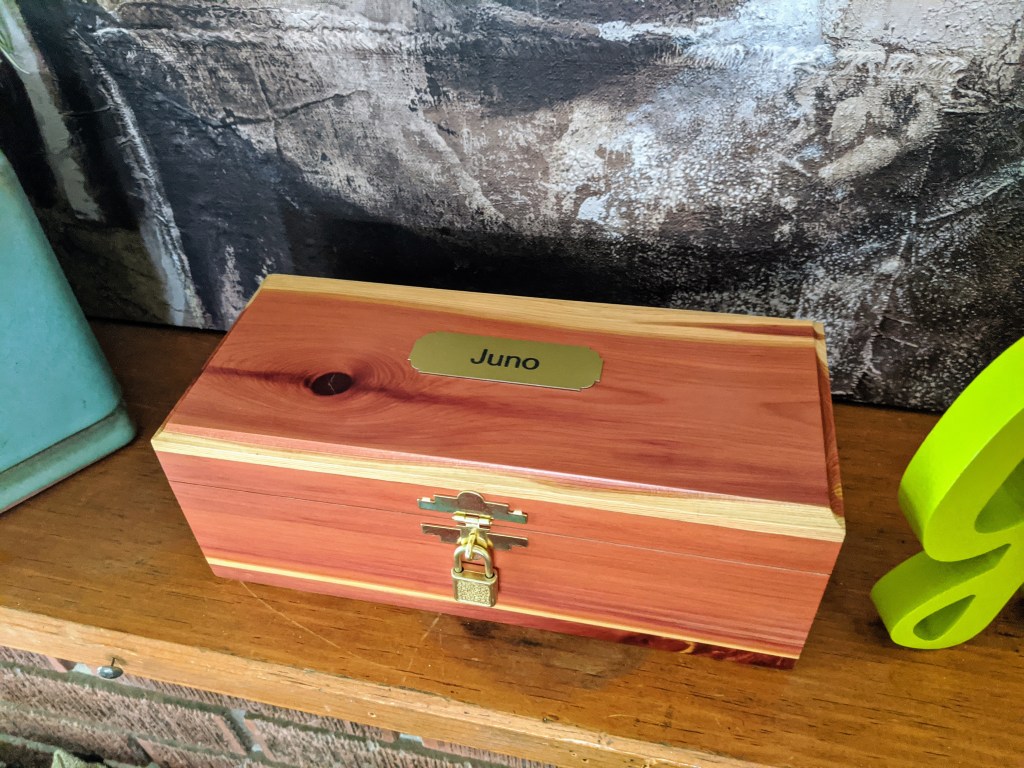
Today, we received her ashes.

We cried again.

Summer Dreams

Juno is better. It wasn’t cancer or poison… it was immune-mediated hemolytic anemia. She’s destroying her own blood cells for no discernible reason. So she’s been on a bunch of medications and on a pretty tight schedule of vet visits, and her red blood cell count is back up to normal. Which means she’s back to obsessively whining and barking at other dogs when we go on walks, stealing chicken nuggets when she thinks no one is looking, and chasing squirrels. Which means we have to get back to pushing plates to the middle of the table when we walk away. (She’s been barking at other dogs her whole 11 years, in spite of many, varied attempts at training the behavior away… so we just accept it.)

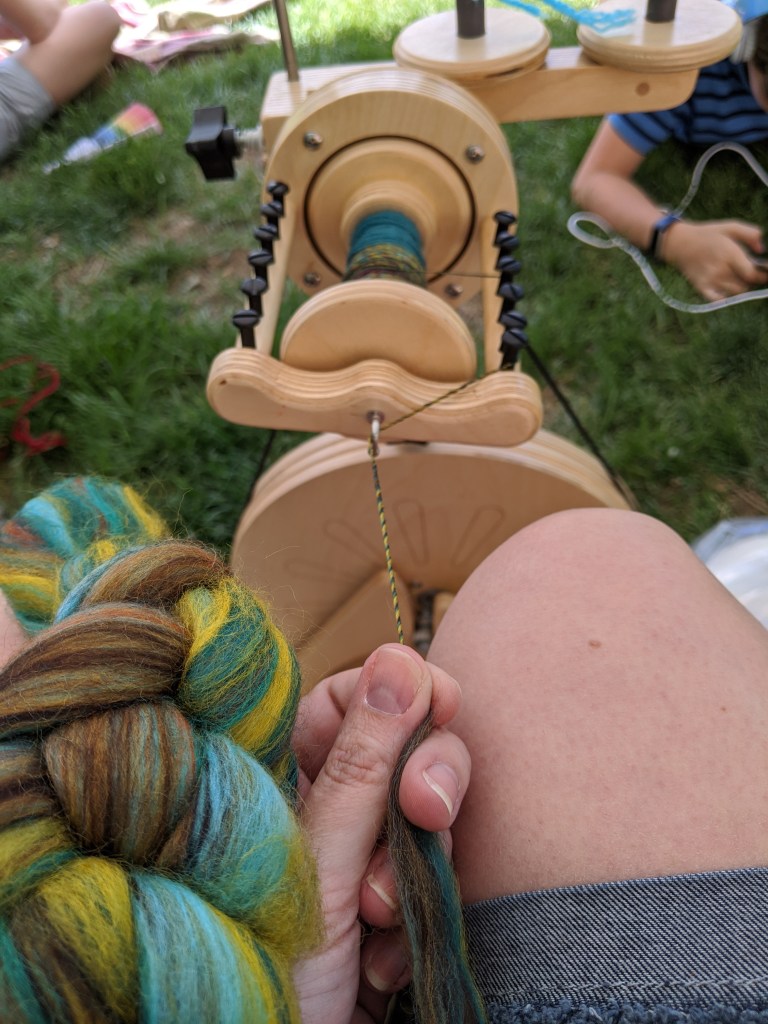
I got a spinning wheel for Mother’s day and have been making a bunch of yarn. I’ve also been working on developing new knitting skills and my friend who crochets has been re-teaching and encouraging me to crochet. That has all been a much needed distraction from summer homeschooling.

We’re doing “homeschool lite” for the summer. Which, in simplified terms, means we’re mostly making the kids do stuff they really hate doing!

Really, we’re having them do work in each of the usual subjects only once per week, except each kid has a personalized plan which includes one subject they need to visit twice. We chose the double subject based on what they’re struggling with most. So… everyone gets to do the thing they dislike the most… the most.

Upon reflection, this was clearly a plan that was bound to result in anger and frustration for everyone involved.

We did also take a short break from school all together. That should have felt refreshing, but I think it might have just made it harder to get back into the swing of the summer plan.

We spent a weekend camping on the Cache le Poudre with the kids. It’s so beautiful and scenic, and we only had to hike in a mile or two. I love hiking, but I’m pretty out of practice. Besides, some of us have pretty short legs and even shorter patience. We also had to take Juno with us so we could keep up with her medications, and I don’t know how much hiking she would have been able to do.

I still don’t really know what going back to school for my masters is going to look like. One of the classes I’m signed up for is online, and the other is in-person but only once per week. It’s looking like the two elementary-aged kids will be doing a hybrid or fully-online model for the coming school year. I don’t know what’s going to happen with the middle schoolers. I’m still leaning toward homeschooling them, but I think I need to find a good curriculum this time. I don’t feel fully comfortable with figuring out what they need to learn at this age.

All of them are showing definite signs of having fallen behind at school this year. That’s not surprising considering they missed out on the last couple of months of classes, while we struggled with online learning and staring at screens all day. However, I’m especially concerned about the twins (the middle schoolers). I’m not really convinced they learned anything in 7th grade until they were doing their learning at home. So, we’re playing catch-up and wondering if it’s worth sending them back next year.

We’re also having a bunch of work done on and around our house this summer. So far, we’ve had an old, poorly-planned garden with a terrible, plastic fence pulled out and a cement slab and electrical conduit installed in part of that area. Soon, we’ll be having a shed installed and finished out to be an office for my partner. He’s working from home indefinitely, and right now he’s taking over our bedroom to do so.

Once that’s done, we’re having the twins’ room (a garage finished into a huge bedroom), split into two, smaller rooms so they don’t have to share. Then, we’re addressing a mold problem that developed in the wall between our bedroom and the attached bathroom when the shower leaked. That’ll involve replacing the carpet, the wall, and the shower liner at least.

We also plan to build our own, raised-bed gardening set-up so we can start growing lots of produce next year. I’m hoping that we realize it’s easy and we love it, and start building edible gardening beds all over so we can say, “goodbye” to the high-maintenance, water-intensive, foreign mono-culture that is lawn grass. We’ll see.

Best Friend Trouble

Yesterday morning, our 11-year-old dog, Juno, collapsed. We thought she might have had a seizure and lost control or awareness of her legs. She’s had seizures before, but not like this. My partner called me out of the bedroom in a bit of a panic. He says he thought, in that moment, that this might be it for her. When I got to the room, she was laying on her side in front of the love seat, looking a little worried.

Our regular vet was in a surgery, so the receptionist said we should take Juno to an emergency vet clinic. The emergency clinic said we should just make an appointment with our regular vet if we think it was a seizure and she’s had them before. So we called the regular vet back. They insisted that if she collapsed, she should be seen right away, and that means taking her to the emergency clinic. The emergency clinic conceded, and my partner spent the rest of the morning there with Juno.

Because of the pandemic, he sat in our van in the parking lot with Juno in the back. Someone came to retrieve her. They called to update him on her status and to comment on her outstanding disposition, and eventually they brought her back. I wasn’t there, but it seems so strange to send your dog off with a stranger instead of comforting them during their appointments. Of course, more importantly, I’m extremely thankful that places like this have found a way to continue serving their clients in such a confusing and concerning time and I hope the people working there are able to stay safe.

After ultrasounds and blood work, the staff was able to tell us that Juno is seriously anemic. I learned that normal red blood cell count (at least for dogs) is about 50% and 20% is dangerously low and requires transfusion. Juno was at 25%.

They said they couldn’t be sure what was causing her anemia, and the best way to begin searching for answers would be to send her home with steroids and antibiotics because the culprit could be something as simple as a bad infection. If her red blood cell count rebounds after several days on those prescriptions, she’s probably just fighting something and needed some help.

We made an appointment with her regular vet for Monday, to see if the count comes back up. But if it doesn’t, we’ll have x-rays to do in order to determine which of the other possible options she has. It might be an autoimmune issue that will mean she has to be on steroids for the rest of her life (to help her maintain a decent count), or cancer in her major organs. So… it could be anything from doggy flu to cancer.

None of us are dealing with this especially well. I find myself thinking about it almost constantly, as though thinking about it is going to fix it somehow. I’m a fairly logical person. I know it’s important to remember that we don’t know what we’re facing and that we’re doing everything we can with the information we have (and we have all the information we can possibly get). But that doesn’t keep me from wishing I could go back and fix it before it got this bad… or at least jump forward to Monday and know already. Not knowing is painful.

All is Well… Too Well

As I sit on the couch, putting my thoughts into a blog, my 7-year-old is watching Magic School Bus across the room. In their respective rooms, my other kids are programming, writing stories, and doing math. Today, everyone seems happy to do their work. Yesterday, however, the youngest was literally yelling about wanting “just ONE day off!” as though I’m some kind of tyrant when in reality, they’re getting weekends off and every day is a half day as long as they do their work when they’re asked to.

In spite of the fact that the older kids have avoided doing math work and the youngest has fully cried about having to write a paragraph twice a week, I’m hearing requests to continue homeschooling from all of them. They all say they’re learning far more and they’re less stressed and generally happier doing things this way.

It’s not surprising. We homeschooled them all when they were younger because we felt we were better equipped to teach them than the local schools, and one of the older kids had medical issues which gave us pause when considering sending them off to someone else’s care. We know it can work. In fact, I continued to homeschool them while I was working on my undergrad degree for a while. That is, until they requested public school.

But, at the time, we had my mom, sister, and niece living with us. My mom looked after my kids while I went to school. Also, the kids were all younger. I was teaching the twins about money and my middle child was just learning to read. Now they’re doing pre-algrebra and multiplication, respectively, which we are equipped to teach but seems like it will require more dedicated work… and we don’t really have any help.

My partner could work from home on the days I need to be gone, but he’d be busy. At least there’d be an adult here in case of emergency, but that doesn’t help much in the education area. Our budget doesn’t really have room for that much babysitting or a nanny. I’ve heard of some families expecting their older children to take charge of instructing the younger kids at times like this, but I’m concerned about relying on that.

To make things even more complicated, I haven’t been able to register for classes to start my masters program because of some kind of technical problem that no one else seems to be able to see or fix. I’ve spent a few weeks emailing and virtually meeting with various representatives of the university and getting nowhere. In fact, the emails I get in return from the registrar’s office seem to just repeat the questions and advice of previous emails as though whoever is reading them has never seen the dozen or so I’ve sent.

So, I don’t even know what my schedule is going to be. If I can take all the classes I need for the semester on two days and then have three week days off, I think we could manage to get everything done on the days I’m home, and the kids are self-motivated enough that I could probably get my own school work done at the same time. I just can’t know yet. And since I can’t register for classes or get any good advice to solve my problem, I might not even be going back in the fall… in which case, I might as well just homeschool them.

I really want to figure out how to make this work. So I’ve requested to join a forum for a local homeschooling group where I hope to ask some questions and get some insight into how others have gotten through similar situations. Hopefully I can find some kind of solution.

Design a site like this with WordPress.com
Get started