Featured

But Why?

I want to do a bit of a deep dive into why I’m doing all of this. I want you to know, and I also want to be able to look back on this when I’m really questioning myself.

I wrote those first two sentences in March, then I tucked this draft away into the dusty recesses of the internet and probably didn’t even look at it again until today… Friday, December 18. It probably would have been a great exercise. I certainly had good, productive, self-aware intentions. Self-care is hard.

Remember March? People in the US were already getting sick, we were all starting to reconsider travel, but we really didn’t know what was coming. Spring break was extended and extended again before we were finally told we wouldn’t be returning to school buildings. Back then, I had decided I would be distancing my family from this remote school mess and jumping straight back into homeschooling my four kids, but I hadn’t really started yet. It had been more than a month since I unwittingly accepted my place in the environmental science masters cohort at UC Denver. I hadn’t started that yet either. I had done some frantic internet searching to see if anyone else had anything to say about digging into grad school while guiding a herd of children through their own education. Mainly, the internet doesn’t recommend it. I just didn’t feel like I had a justifiable choice.
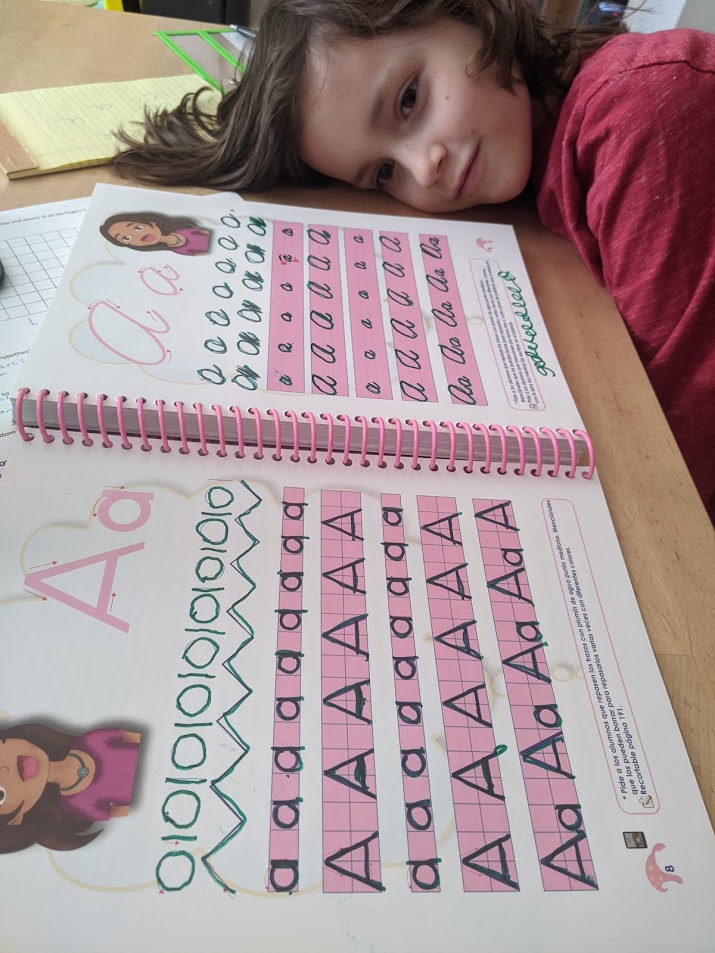
The biggest problem with remote learning is that four out of the six of us have been diagnosed with ADHD, and the other two probably could be. Sitting in front of a computer all day (in the case of the twins) or even for an hour-long block (the Montessori version) is not going to serve us well when we’re trying to absorb new information. My classes are also virtual, but I’m in my 30’s and I’ve collected a lot of coping mechanisms over the years. I knit and fidget and take notes during meetings to maintain focus. The twins are starting to learn those skills, but the younger two are new to the game. So, our experimental first week following the Montessori’s lead didn’t go well.

It was full of alarms on my phone to help me get them to their virtual lessons, them dancing around in front of laptops and/or doing anything and everything to avoid being in front of the camera, me asking what the lesson was about and whether there was follow-up work to be done, and them… not knowing. There were innumerable technical difficulties. Often the teachers couldn’t help because they weren’t familiar with how the software functions in different browsers or on different operating systems. I might not even know something went wrong because of course, they have no incentive to tell me they need help if they’d rather not even attend the lessons. All the while, I was also trying to orchestrate middle school from scratch.

Believe it or not, it was harder to fully homeschool only two of my kids than it has been to include them all. I spent a portion of the summer drawing up basic curriculum outlines for all four kids, just in case, and with the hope that I wouldn’t need all of them. I found resources and made important decisions in advance. So, when I told the Montessori that we wouldn’t be attending lessons, I was already prepared to end up completely in charge. The two younger kids now check in to the virtual classroom every day to maintain attendance, but most of their work is on paper and is assigned by me. I try to follow along with the topics being discussed by their classmates, but I often don’t even know what those are because the teachers talk to the students in the meetings we don’t attend and then don’t share any of that with us (in spite of agreeing to support our approach). Fortunately, that’s fine because I already have a trajectory set for my kids and high expectations.

M is 11 years old, autistic, and has ADHD. She blows me away regularly. She programs and writes impressive fiction. She reads like she breathes (but only after an epic struggle to get her to even try in kindergarten and first grade). She doesn’t like to look at people’s faces and doesn’t like to feel like she’s being watched. Sometimes she gets overwhelmed by things she might have previously been able to tolerate and she yells or breaks things (most recently, she broke her glasses out of anger, for the second time). You can see how virtual classrooms would be difficult for her, and subsequently for me.

E is about to be eight. He seems to be the recipient of two helpings of ADHD: one from each parent. It seems like he learns new physical skills in minutes. Within a day of receiving a jump rope, he had it almost entirely figured out. He also reads as though his life depends on it, but only when everyone else is quiet and boring. In a group (like at the dinner table) he seems to become so preoccupied with filling all silences (or talking over the conversation) with loud, fictional stories, singing, and wild gesticulations, that he loses all awareness of the task at hand. When he was physically attending school, he often sat in the library corner of the classroom and didn’t accomplish anything but reading, seemingly because he was overwhelmed by his inability to focus. In virtual school, this results in him hiding behind the laptop screen, covering his ears.

I’ve decided not to accept that. I’ve decided to do what I can to support my kids while they find their way through this and come out the other end stronger. In our case, that means avoiding the virtual classroom.

I have two teenagers who were enrolled in the local public middle school and two Montessori elementary kids. The middle school repeatedly disappointed me with their sheer inability to come up with a plan, and then again by coming up with an unreasonable one. I gave up on that situation pretty early and withdrew the twin teens entirely. The Montessori took some time to come up with a solution, but I thought it was well thought out and probably the best compromise possible, so we tried it.

I’m in school full time myself because I love education, and I want to contribute knowledge to the world. In my first semester, I managed to earn A’s. My kids are progressing through the expected curriculum at an acceptable (and in some cases outstanding) rate. They’re even learning a little self-direction. All signs suggest that everything is fine, and I wasn’t even taking meds. I am quite happy with all of our work so far, but it is rather stressful. It’s a lot to juggle, and I frequently find myself worrying that I’ve missed something critical or failed us in some way. After all, in addition to all of this, I also have to be their mom. I have to provide them with healthy food, clothes, emotional support, social and moral guidance, and good examples. Since there seem to be enough of them that at least one of them is complaining at any given time, it’s hard to know if I’m succeeding. Still, I think I’m doing the right thing.

Next semester, I’m taking more classes. I work as a research assistant and I’m already beginning work on my thesis. Next semester, the twins will still be homeschooled and the Montessori still isn’t going back to in-person classes. I’ll still be in charge of their education. I’m endlessly thankful for help from my partner, of course, and the fact that his transition to working from home was practically seamless. He steps in during his breaks to help answer questions when I’m already busy. He also does a lot of the cooking at dinner time and half of the grocery shopping. Probably most importantly, though, he emotionally supports me, believes in me, and listens to me (even when I’ve just interrupted his reading).

Also, I’ve just started seeing a new psychiatrist and taking Adderall again. I hope that winter break will be a good proving ground for the prescription so I can take on next semester with more confidence and less stress. We’ll see.
Featured

Homeschooling Again

It’s hard to be an adult right now; it might be even harder to be a kid. Being an adult trying to raise kids is a tricky game I’m not even sure I know how to play, but I’m trying.

We are living in strange times. I wasn’t expecting to be writing about something like this when I made this blog. Many aisles at the grocery store are empty, many businesses are closed, others are shifting operations to help produce personal protective equipment for doctors and nurses or hand sanitizer to help us recover from a panic-induced shortage. We were being asked to limit social gatherings and stay 6 feet away from others. Then, we were being respectfully asked to choose to stay home. Now, we’re being told that we legally have to stay home.

People are losing their jobs and worrying about how they’re going to pay bills and what’s going to happen if they get sick. Essential workers are still going to work, but their kids aren’t going to school and it’s hard (if not impossible) to find child care. Some of us are saying the people and the government aren’t doing enough to control this thing. Other are saying we’re doing too much, and overreacting. But the general theme seems to be that we really don’t know exactly what’s going on, because we’re being told different stories wherever we look.

With all of this chaos around us, we also need to manage our kids’ education. I do believe it’s for the best. My dude puts his face on random things in unsavory places like the airport. He should not be mingling with twenty other small people (who probably have the same tendencies) during a pandemic. Besides, I’ve homeschooled most of my kids before. I’ve got the skills and resources to get through this. It just makes for a wild household, with my partner working from home and my kids all watching Bill Nye, exploding baking soda and vinegar on the table, listening to podcasts about history, and trying to learn algebra, javascript, and violin.

With all of the tools out there to help them, it’s not that difficult for one person to manage. Also, if you constantly remind yourself that they do not spend anywhere near seven hours actively learning at school, you’ll do fine. Public schools just aren’t as efficient as homeschool can be. My kids are averaging about 45 minutes per subject per day, and I only expect them to do three subjects. Based on my (maybe obsessive) monitoring of their progress for the past several months, and what I’ve seen so far this week, I’m pretty sure they’re learning more in a couple of hours at home than they do in seven hours at school. Plus: I LOVE IT!

I don’t have to argue with administrators about whether my kid’s shorts are too short. I’m not receiving calls from school staff to inform me that my kid said something mean to another kid or stormed out of class after someone else said something mean. I don’t have to negotiate with other adults about how to handle my kids at all! (except for my partner… we spent a lot of time in friendly deliberations about this kind of stuff, but that’s easy)

Honestly, for this one thing: thank you, novel coronavirus! But also, please stop and go away! Obviously, there are a lot of reasons I’m not a big fan. I’m downright scared of this disease and what the ramifications of this disaster are going to be. Also, as much as I’m loving having my kids home and sharing the magical world of math and science with them every day (and that’s not even sarcasm), I also want to go get my master’s degree and I really don’t know what’s going to happen with that right now. Can we please go back to normal?

The Big Update

I dropped out of my master’s program! (we’ll get to that)

It has been about six months since my last update on this blog. There were many days when I thought I should write something but never got around to it. A lot has changed and I have needed to adapt in response. It honestly hasn’t left much room for any discretionary activities like blogging.

We went back to homeschooling the teenagers. They were excited to go back to school and were going to one of the best public schools in our area. They made friends right away and were trying out things like sports teams and making after-school plans with their friends. However, the academic situation was pretty terrible. I guess there were a lot of defiant students who were disruptive in classrooms and invective outside of class. The school wasn’t doing much to manage this situation because the misconduct was so rampant that they lacked the staff, resources, or facilities with which to respond.

This was supposed to be their freshman year. We all thought it would be exciting and fun and a new phase of their lives. They wound up only spending the first few months in a brick-and-mortar school and were asking to be homeschooled for half of that time. We wanted to have them finish their first semester and see how they felt when Christmas break came, but we wound up only making it to Thanksgiving. I tried not to pry, but my understanding is there was some amount of bullying involved.

We bought a curriculum and signed up with an umbrella school to help us keep things on track, since following the rules and having something to show for it starts to matter in high school. Now, we’re planning on adding tiny-home building to the schedule. They were asking for more hands-on experiences and more parent participation, and we’re hoping to provide them each with an asset at the end of their education. They will each have a house that they built and know how to maintain and they can either live in it, or rent/sell it.

M, who is now twelve, is doing well in her magnet school. We’ve struggled a lot with math, but not in the way that you might think. The trouble seems to be that M is actually quite good at math and picks up on concepts fairly easily, but her ADHD and autism get in her way. She struggles to pay attention in the busy classroom and often forgets (even at home with one-on-one attention) that she is in the middle of doing a math problem. Additionally, she still falters when faced with talking to people who she sees as uncomfortable authority figures… like her math teacher. I get to see her take on new ideas with ease at home, but her teacher worries about her and her math grade suffers because she forgets about worksheets and homework.

She has also had an excellent care team at school this year. She has an academic interventionist who takes her out of class to work on topics that are otherwise difficult for her (mostly math), and a social worker who manages her needs and communicates with teachers on her behalf. Her interventionist is leaving the school for a new position elsewhere and we’re still not sure what that transition will look like, but M is taking it pretty well so far.

Then there’s Cub. He also started over at a new school this year. At the beginning of the school year, he was having all sorts of trouble. He made friends but was also picked on for things like his long hair. We got a lot of calls from the school about his refusal to do writing work and his inability to sit still. He would frequently refuse to return to class and ask to come home, so we went to his school and talked him into returning to class several times.

Ultimately, his teacher decided to try giving him higher-level work to see how he would respond, and things got a bit better. However, since he was the only kid in class doing that work, it was hard for him to stay focused while the teacher was busy with other kids. So, now he’s in a gifted class with other kids like him. He hated it at first because he missed his friends from his original group, but he’s made new friends in the new room and no longer asks to come home instead of going back to class.

There was one incident after school, when he was on his way to an afterschool lego activity. He encountered a kid who had misgendered him on the playground sometime before, and, having no filters, said, “I remember you. You misgendered me.” Which, in retrospect, I think he realizes could have stayed in his head instead of being verbalized. The kid punched him in the face. Cub came home instead of going to his activity that day, but I think his spirit is reasonably intact.

All of this led to my dropping out of my master’s program to some extent. When I applied to the program, the pandemic hadn’t started. When I was accepted, it hadn’t arrived in the US yet. When I started classes, everything was remote, which made attending to my kids’ needs much more practical. Then, when my school and all of theirs decided we should attend classes in person again, their needs actually increased while my availability plummeted. That was a huge source of stress, but there are other reasons for my leaving as well.

My thesis, which I had been working on for about a year, had gotten nowhere. I spent months collecting data just to find out it was useless because something went wrong with the collection methods. One could argue that it wasn’t a total waste of time because I learned from my mistakes. That’s what I told myself. I ran tests to rule out possible problems with the equipment, but those tests did not rule out those possible problems. So, I was looking at more time spent doing more exhaustive tests.

Ultimately, if there were problems with the equipment that were resulting in the irregular data, I suppose my advisor would have needed to fix the equipment and I would need to start over on data collection. If it turned out that the equipment was not to blame, that would show that the equipment was not a good fit for the study. In that case, I would need to come up with a new study design using different equipment and start over with the data collection. Either way, I was facing a “back to square one” situation and I wasn’t feeling especially good about the amount of work I had put in while making no progress. But I probably could have continued treading water for many more months before giving up on that project. Frankly, I was downright thrilled about my thesis and I’m disappointed to be walking away from it.

The final nail in the coffin of my time in this master’s program came when I signed up for the university’s career services and realized that I no longer want to do any of the things that this program would have prepared me for. While I do believe in the value of education for education’s sake, I entered this program with the intent to prepare myself for a career. At the time, I wanted to go on to get a PhD and become a professor at a research-focused university so I could do fieldwork forever! I think the pandemic has changed my priorities.

When I discovered that I no longer wanted what I was working (and paying) for, I assumed I had been wrong. I believed and said things like, “I thought I wanted to do fieldwork forever, but I realized I don’t.” Now I think that mindset wasn’t giving my past self enough credit. I did want to do fieldwork forever, and now I don’t. That’s okay.

I want to be present for my kids. I don’t want to feel like I’m on a thesis treadmill. I don’t want to do fieldwork forever. I imagine I will still get a master’s degree in the near future. Having worked my tail off and achieved the best GPA I’ve ever had, I think (and hope) many of my credits will transfer. Maybe horticulture would be a better focus for me, so I can work locally at places like the zoo or botanic gardens or for the city. For now, I think I’ll just work on improving my house, teaching and loving my kids, and knitting.

I recognize that I am privileged to be able to make that choice: the choice to be present for my kids and manage my house – a choice we should all be able to make.

Thank You, Christopher Meloche

This is something new I want to try. I’m going to write a series of thank you letters to people who have had important impacts on my life. I hear this is good for mental health, but, more importantly, I expect this to help me explore the connections I have with people in my life. When I am feeling overwhelmed, I often say I don’t have many (or I wish I had more) friends or that I’m bad at making friends. I hope writing about important people in my life will help me see something more positive than that.

I stopped by your office and you weren’t there. You’re a busy human. I stop by when I’m around and have free time because I figure you’ll be there every now and then, and I’ll get to say, “hi”. I fully expect that you won’t be there most of the time. I spent some time thinking about why I stop by.

In reality, I’m not sure if we’ve ever just said, “hi”. Even when you’re in a hurry to get somewhere, we always seem to manage to have a substantial conversation about something. We’ve talked about fountain pens and waterproof ink, green roofs, plants and soil, music we like, places we’ve traveled, your kids, my kids, our spouses, and all kinds of things. You have felt like a friend to me, even when you were my professor and technically my superior. I’m still sorry I dropped your plant physiology class. I feel like I missed out, but that semester was messy for me.

Speaking of messy, you were there for me when my daughter’s school recently called. I came back into your office and you had overheard the distress in my voice. You had made coffee and offered me a mug. I don’t drink coffee, but I still felt seen and valued. I told you I don’t drink coffee, so you offered me hot water and a tea bag. Having already felt seen and valued, this extra effort made me feel… special? I’m not a huge fan of how cliche that sounds, but it seems reasonably appropriate here. I still visit your office because you have always made me feel welcome and worthy.

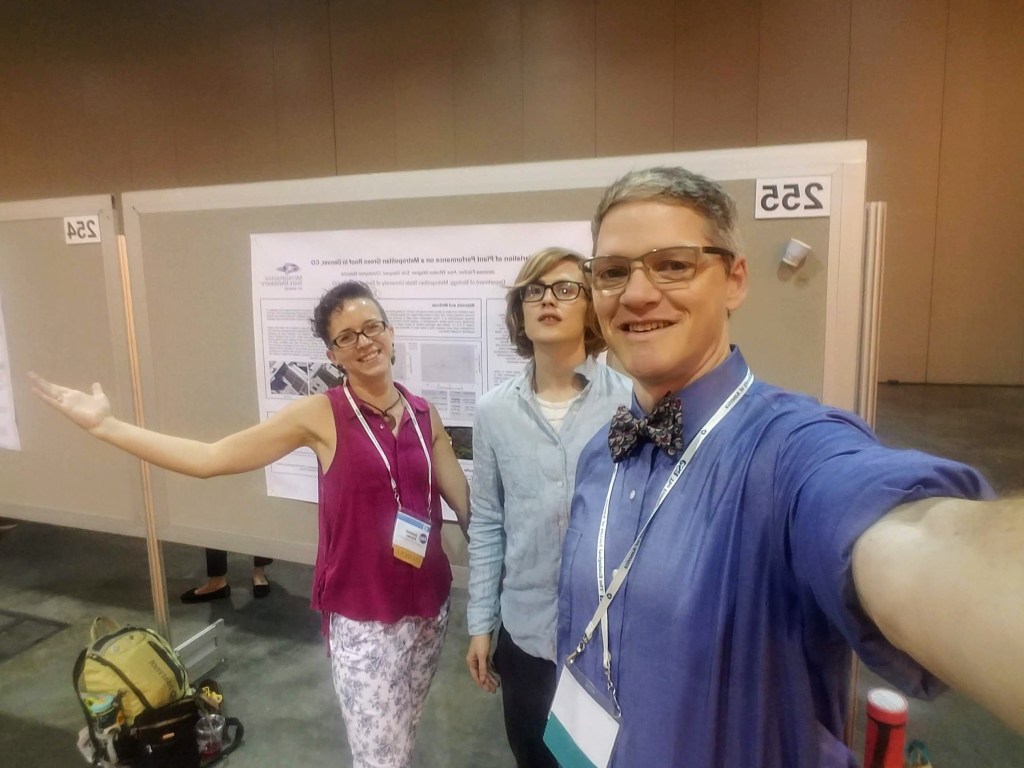
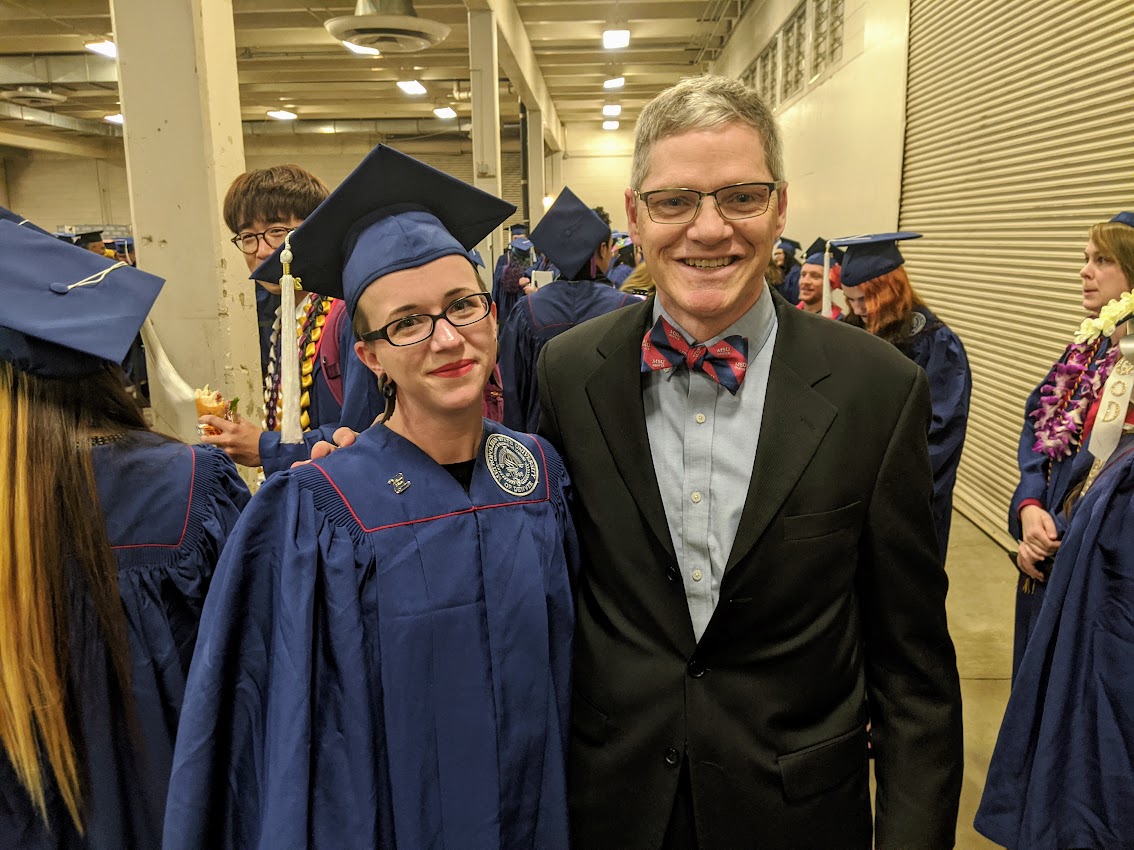
In spite of having never completed one of your classes, I worked with you for a couple of years. You oversaw my undergraduate research project, got me involved in conferences, drove me to New Orleans to present our work, reviewed my honors thesis, attended my thesis presentation, and hugged me for the first and only time at my graduation. You might not think of it this way, but I evolved quite a bit while you were watching. So, I continue to visit your office because I want you to see me grow.

You were not the person who inspired me to look more closely at plants. I’m sure I’ll write another “thank you” to that person in the near future. But you are the person who set me on the path of sustainable urban ecosystems, by taking me to that first green roof. I’m still studying that roof (and others) as part of my master’s thesis work. So, I still visit your office because I’m on campus an awful lot anyway.

Still, I want you to know that you’re exceptional. You are among a short list of people who inspire me while also allowing me to feel fundamentally safe and comfortable in their presence. You helped shape the person I have become and am becoming. I am proud of that person, and I hope you are as well.

Finally Successful

I finally had a completely successful day collecting data! I fully charged the batteries before heading out. I didn’t forget my badge at home, so I was able to access the lab. I made it to all three roofs without succumbing to heat exhaustion. I remembered to adjust settings on the equipment for each collar before starting the sample. I got an entire, usable data set!

I got home, showered the sweat crust off of myself and crawled in bed. From under my quilt, I called the vet about my elderly, sick dog, barely managed to stay awake long enough for them to call me back, and napped. I drank a lot of water, and even remembered to sunscreen my face and cover most of my body with protective clothing. I forgot my forearms, but the day was such a shocking success that I can’t feel too bad about that.

I had a professor last semester who really believes that masters degrees should not take more than two years except under rare, dire circumstances. His focus is in GIS. I’m not saying he’s wrong. Being in school is expensive, and burnout is a real concern. I just don’t see how I could possibly plan my thesis, learn to use my equipment, collect an entire growing season of data, process that data, and write a thesis and take all the right classes in that time. I started working on this in November. In that time, I’ve:

  • Done a ton of background research
  • Hunted down roofs I can study
  • Formed my thesis committee
  • Done a research proposal
  • Spent a bunch of time doing mock data collection with the equipment
  • Installed collars
  • Made a bunch of mistakes and learned how to actually use the equipment
  • Finally gotten one whole day of useful data!

All while also taking classes and homeschooling kids. Now, it’s late July and I’ve missed all of spring and half of summer, so I’ll need to collect that data next year. Since this fall will be the beginning of my second year, it’s impossible for me to be ready to finish my master’s on a two-year timeline. My research advisor says this is perfectly normal. I’ve been panicking about a timeline emphasized by a professor who does most of his work on a computer, not in the field. Field work is time-consuming.

I’m on track to graduate at the end of my second year, academically. But taking a little extra time will be nice for reasons other than data collection. My entire master’s degree program has taken place under pandemic conditions so far. I’ve had online and remote classes only. I’ve met a couple of other students a few times for projects, but I definitely don’t feel like I’ve gotten the networking opportunities that a graduate degree is supposed to afford. I don’t mind sticking around a little longer for that. I’m thankful I can afford it.

Getting Up Again

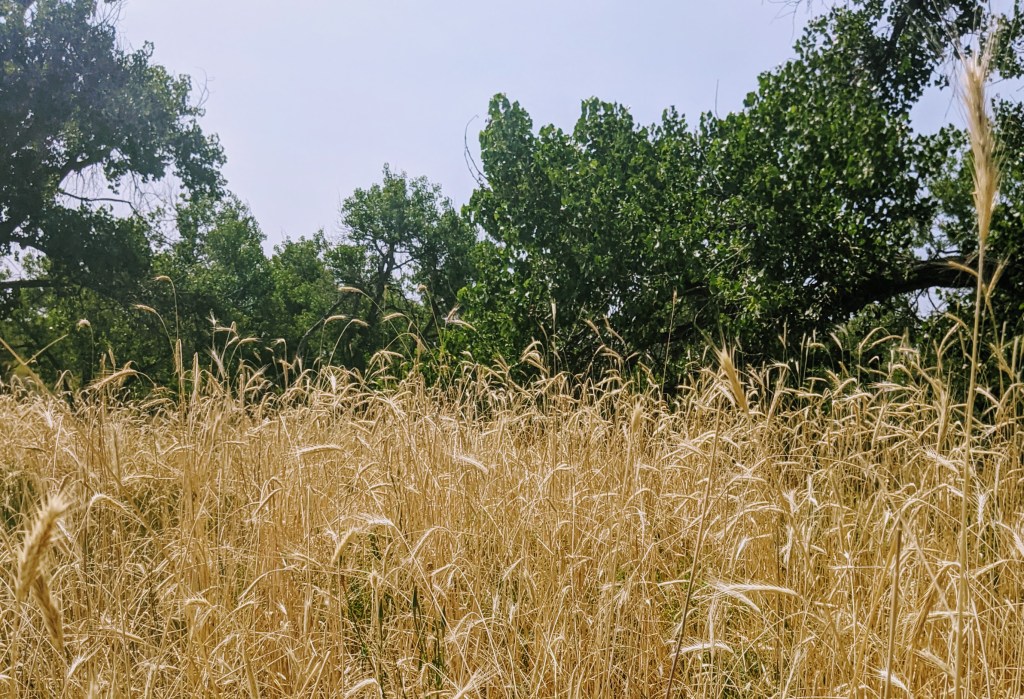
I love summer grasses

You might have noticed (from my previous post) that I was having a sad. This is what I call my occasional encounters with acute depression. When I am in that space, it feels like everything is much more difficult than it objectively is, or even impossible, and simultaneously pointless. Why would anyone bother doing something so difficult if it might turn out to be impossible and even if it’s not, it won’t matter that you did it?

I feel that it is necessary to prepare you for what I am about to say. I am not, in any way, suggesting that what works for me is a universal truth for everyone. Every person’s sad monster is different. Also, I am a soil scientist. This is not my area of expertise. If you are having a sad, I recommend finding a professional whose expertise align with your struggle. I have a therapist who I speak with regularly. I highly recommend it.

That said, what seems to consistently work for me is just doing something instead of nothing.

When I wrote that last blog, I still hadn’t even emailed the people who manage the roofs I’m studying, which I have to do to find out when I can come in to collect data. I was putting off even that step because emailing people every time I want to schedule a visit is “such an annoying thing to have to do”. And, besides, once I’ve emailed them I’m obligated to do things. I have to show up when I said I would and be uncomfortable in the heat and collect data and drag my heavy equipment around. Ugh.

That’s how I felt at the time.

I talked to my therapist, who has and specializes in ADHD, the day I wrote that last post. I told her, “I don’t want to work on my thesis. I think I hate it.” Further, I explained, I manage to push forth by telling myself, “I hate it right now, but I just need to get through this part.” She responded with an, “Oh no. I think I know where this is going.”

After explaining what I’m doing and why I hate it, we came to the conclusion that I need an assistant or at least an accountability buddy. She runs free “homework sessions”, which are helpful for her and her clients. In these sessions, everyone greets everyone and then no one talks. The session just acts as a block on the calendar when you know you’re going to get work done because you told someone you’d be there to work.

I keep telling myself (and my partner) that I “just” need to set aside scheduled time to go to the home office and work diligently. I say “just” like it’s no big deal, but I can’t make myself do it. Even when I try to schedule time, I don’t show up in the office. I need to water the vegetable garden, clean the kitchen, fold the laundry, vacuum the rugs — or something — instead. This is where accountability buddies come in handy. If I told someone else to meet me there, I feel the pressure to get there. I don’t want my struggles to become someone else’s problem.

I might take advantage of those homework sessions. Those would probably help keep me on track, but what I needed to get me out of the mess I was in last week was to take action.

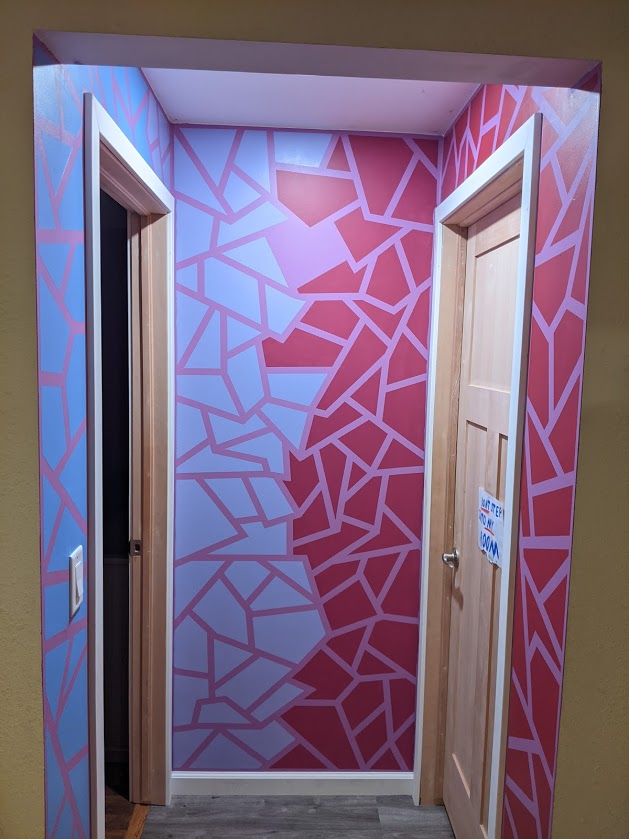
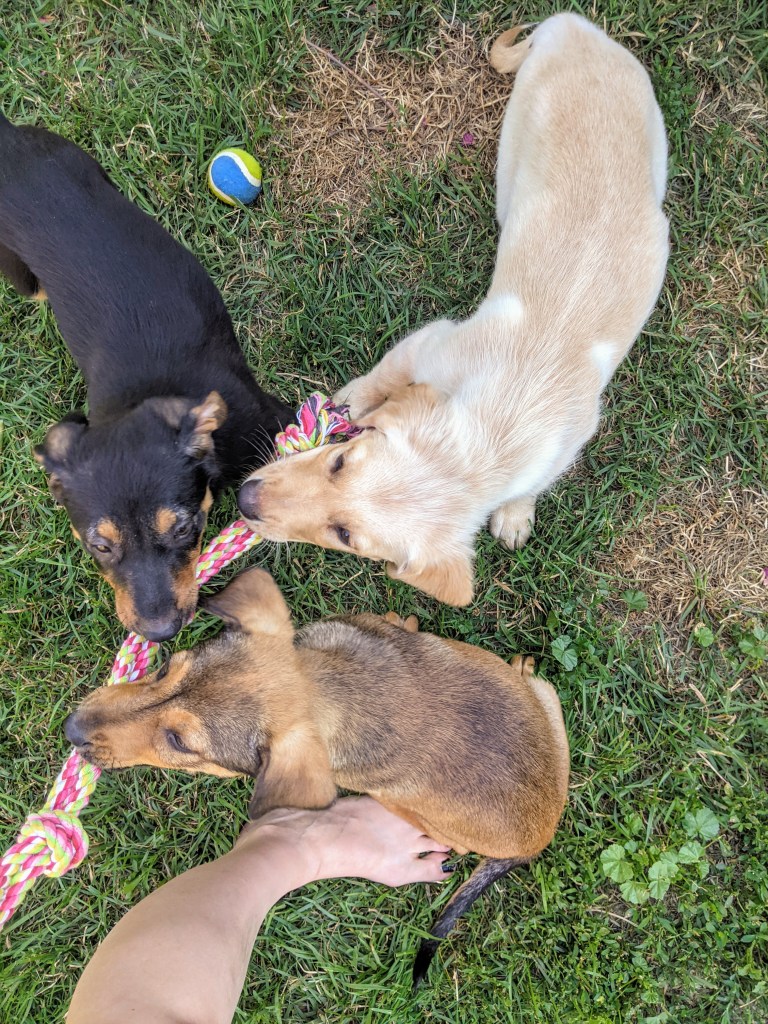
That last blog went up on Tuesday and I finally got myself rallied to email people on Friday. Even as I was doing it, it felt burdensome. But once I had done it, I immediately felt the wall that had been keeping me from being productive crumbling. The complicated painting project I had planned and bought supplies for finally got done, and I did the whole thing in one day! I cleaned things that needed cleaning, made vet appointments for our dogs, took the foster puppies for vaccines, had my niece over, had friends over to play a complicated game (Gloomhaven if you’re wondering), took the kids out for a picnic lunch at a nearby open space, and had a generally lovely weekend.

I read a chapter in John Green’s recent book The Anthropocene Reviewed that further bolstered my motivation. The chapter is titled “The World’s Largest Ball of Paint” and in it, John says,

I’ve often wished — especially when I was younger — that my work was better, that it rose to the level of genius, that I could write well enough to make something worth remembering. But I think that way of imagining art might make individuals too important. Maybe in the end art and life are more like the world’s largest ball of paint. You carefully choose your colors, and then you add your layer as best you can. In time, it gets painted over. The ball gets painted again and again until there is no visible remnant of your paint. And eventually, maybe nobody knows about it except for you.

But that doesn’t mean your layer of paint is irrelevant or a failure. You have permanently, if slightly, changed the larger sphere. You’ve made it more beautiful, and more interesting. The world’s largest ball of paint looks nothing like the baseball it used to be, and you’re part of the reason.

John Green

This resonated with me. I, too, have often wished (especially when I was younger) that I could achieve something great and unforgettable. I have always imagined my impact to be some scientific breakthrough. But for every breakthrough, there are probably many thousands or even millions of incremental improvements in our scientific understanding of the world. Whatever work I do will at least be one of those, even if none of my work ever results in a breakthrough. I guess this is what people mean when they say, “shoot for the moon — even if you miss, you’ll land among the stars”. I can’t hear that platitude without rolling my eyes at its inaccuracy. Still, the sentiment isn’t wrong.

Today, I went to my lab to pick up the batteries for my equipment and make sure they’re charged. Tomorrow, it’s back to the roofs to collect data. For now, I have defeated the sad. It’ll be back, and I will be brave enough to overcome it again.

A Minor Crisis of Purpose

I just took the midterm for my second summer class yesterday. I just came home from my second vacation also. I’m relieved to finally venture out to see family again. What a privilege to have these people in my life and to be able to visit them! Still, I’m feeling pretty overwhelmed by everything right now.

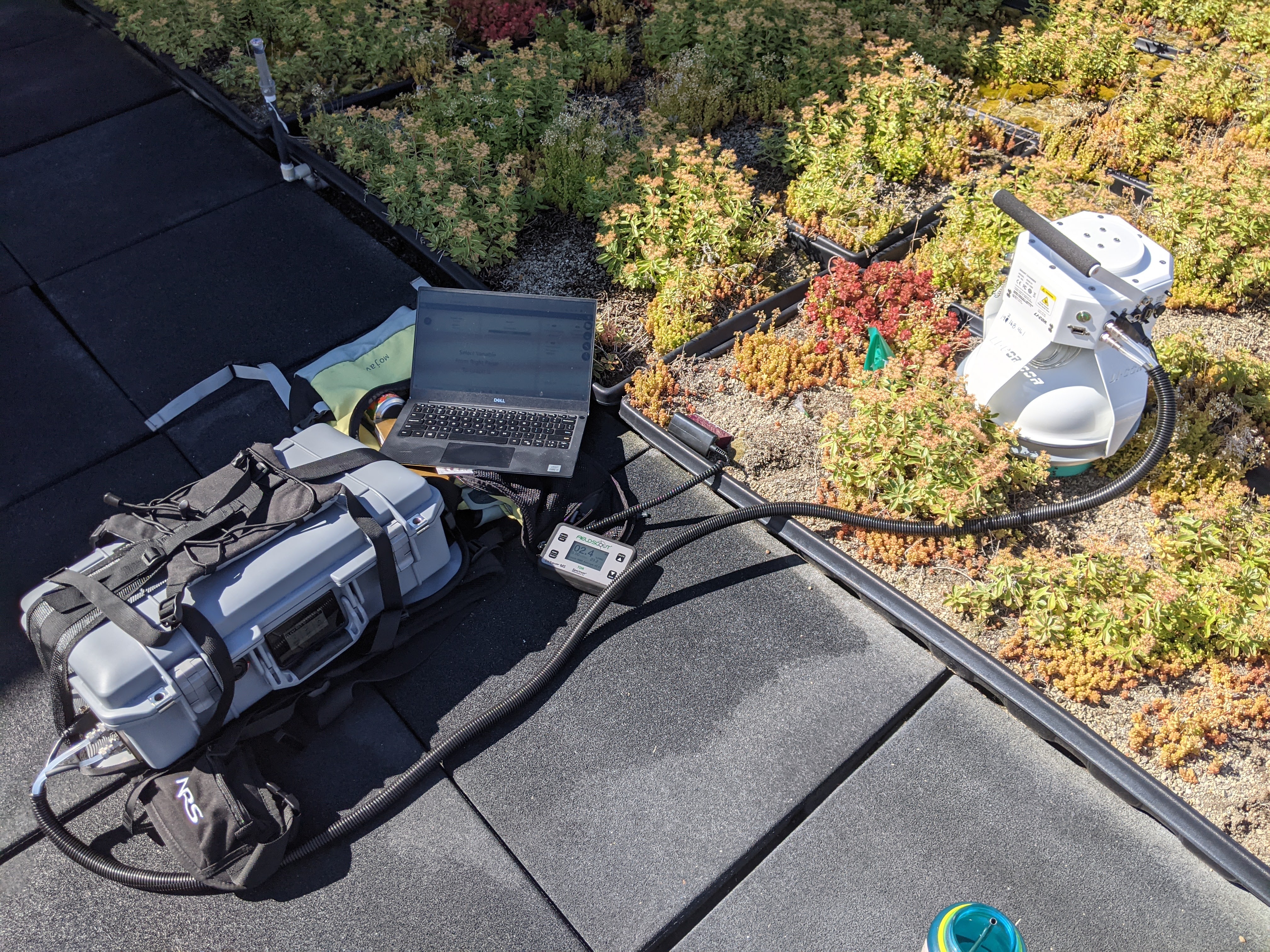
I started trying to collect data from my research sites, but I’m encountering all kinds of hurdles. I’ve been unable to collect complete data due to dead batteries, extreme heat, and my surprise when it turns out I can’t actually carry that much weight on my back for multiple miles around downtown in said extreme heat. Though I do enjoy looking like a ghost buster… I’ve since ordered a wagon. 

I keep feeling like I’m losing interest in my work. I’m putting in an awful lot of effort, making so many mistakes, making so little progress that it feels like nothing, and coming home exhausted. Is what I’m doing even worth doing? I’m not sure. I thought it was when I started, but I’m having trouble putting my finger on exactly why at this point. 

A serious problem with this kind of research (maybe most or all research?) is it’s basically impossible to know if what you’re doing is “worth doing” until you’ve done it. So, I’m going to keep putting in the effort and coming home exhausted, hopefully with fewer mistakes and more progress, until I’ve got data. Then I’ll know if it was worth it. 

I Worry a Lot

I worry that the foster puppy isn’t eating enough. I worry that the feedback I got in the rough draft of my term project wasn’t specific enough to be actionable and I’m going to end up turning in something less than what my professor wanted. I worry that my two youngest kids are incessantly mean to each other and no amount of moral coaching seems to be fixing it.

The pandemic has been a fun source of concern, but now that we’re halfway through our vaccine regimen I have new worries. What happens when my kids go back to school? All of them are going to different schools than they did before lockdown, three different schools in fact. How are we getting them to all of their respective schools (none of them drive yet and two of the schools are outside our district)? How is that going to impact scheduling for my classes now that they are all going to be in person again?

My partner says there’s no sense in worrying about it before we’ve got more information. Of course, I know that’s true. It doesn’t stop me.

In case this is your first time on my blog: I have ADHD. I have been diagnosed. I haven’t been diagnosed with anxiety, but other members of my immediate family have. Plus, apparently, about 25% of people with ADHD also have anxiety. In some ways, it comes with the territory. We’re always forgetting things and we can’t keep focused, so we stress about doing a better job at being or seeming “normal” in a world that’s not designed for us. So, ADHD can cause anxiety. Still, sometimes people just have both. Or sometimes ADHD-like symptoms are caused by underlying anxiety. So…

  • ADHD → anxiety
  • ADHD + anxiety
  • anxiety → ADHD

Anyway, I accept that it is likely I have both, and that the reason Adderall throws me into a tailspin is probably that I need to address my anxiety before I can approach my ADHD. The trouble is I’d probably have to figure out how to make my life less stressful. While I am an absolute champion at finding ways to complicate things*, I do not know how to uncomplicate them.

*We have four kids and two dogs. We foster puppies for a local rescue. I’m in grad school full-time and working part-time. My partner is working full-time and in school part-time. I’ve been homeschooling all of the kids since the first lockdown started. I’m doing a lot of my homework during the kids’ lunch breaks and after they go to bed. I’m reading textbooks as my bedtime reading. When I was told I could choose a format for my term project on the interaction of two biogeochemical nutrient cycles… I chose to write a children’s book. I could have just made a PowerPoint. Through all of this, I also blog. In spite of everything, I still applied for an internship at the local science museum, considered taking an intensive summer class on beekeeping, and am thinking about writing an actual book (not as an assignment or for children).

I tried meditating, but I kept forgetting or failing to make time for it and then I quit trying. I exercise three days a week. I bullet journal, keep calendars and to-do lists, and set reminders for things so I won’t have to try to keep everything in my head all the time. All of this has helped a lot with what used to be my biggest sources of stress. With all that’s been going on lately, though, I have a new source: I’m constantly busy with something, over-booked, and unable to keep up with what I ought to be doing. It seems like when I figure out how to stop dropping plates, I find new ones to spin. This feels like a personality trait and I really don’t know how to reverse something that big. It seems like it’s going to take more than journalling.

Almost Free

I’ve been having a series of emotional meltdowns recently. I feel like I’ve reached logical end of being overextended for too long. Full-time grad school, part time work, full responsibility for educating my kids, plus parenting overtime has definitely caught up with me. However, unless something awful happens, we’re expecting to be able to start getting our vaccines next month! We’re part of the final cohort because we’re young and healthy, so most other people we know have already been/are currently getting vaccinated. Which means we definitely only need to get through the rest of this school year! We’ll be able to do normal summer stuff this summer! We’ll be able to see family again! Most significantly right now, having light at the end of the tunnel — knowing this isn’t going to last much longer — really makes everything feel possible again. I can muster a second (or tenth or something) wind to sail this ship to the end of the semester.

In light of the fact that I should be able to start getting vaccinated against COVID sometime next month, I wanted to take a moment to reflect on things I miss and things I hope will stay the same. I think we all have to admit there are things we at least saw the value of, if not actively liked, about this year’s weirdness.

Things I miss:

  1. Meeting my peers in class – Zoom break-out rooms aren’t the same as casual conversations before class starts. I have been in the same classes with several people for the whole year and still feel like I haven’t met them. I’ve seen their faces, and heard them respond to questions, but I can’t even remember their names. I know they feel the same.
  2. Eating anywhere other than home – We went to a restaurant for my birthday last summer. Half of the tables were necessarily empty, and we sat in a booth that was semi-walled-off and facing out a big, open, garage door. There were only digital menus. Everyone wore masks whenever the server was around. I think that was the only time we’ve ventured to a restaurant since last spring break.
  3. Traveling – Normally, we’d go out of state at least once in the summer, and for Thanksgiving every year. We haven’t done any of that since last March. I do know people who have traveled, and been safe, but the hassles surrounding safety seem like enough of a deterrent for me.
  4. Feeling safe – There was a really big snow storm here recently and my partner went out to help our older, retired, veteran neighbor shovel his driveway. Neither my partner nor the neighbor wore a mask and I quietly panicked. I don’t want to get sick or unknowingly pass it to the neighbor, but it still feels rude to run out and ask them to wear masks. It feels like I’m insinuating that we think our neighbor is a health risk to us or something, when the truth is I’m worried that anyone could be. I don’t want to become part of the problem.
  5. Podcasts, gratefuls, and other things I do in the car – At first, I was meeting a couple of times a week with one friend and her kids for our homeschool pod. That lasted until Thanksgiving, when case numbers jumped up and they were meeting with family members. Then there were birthdays and Christmas which meant more family gatherings, so we haven’t gotten together since. I thought I didn’t mind not driving. Recently, I realized that I do a lot of mentally healthy things (like listen to educational podcasts) when I’m driving, especially if I’m driving alone (which is when I used to list things I’m grateful for).

Things I hope stay the same:

  1. Not having to drive so much – Yeah, I miss podcasts and gratefuls, but I don’t miss the hour of driving my partner had to do 5 days a week (and I had to do 3 or 4 days). The commute makes it hard to schedule my classes because someone needs to be available to drop off and pick up kids. It cuts into time for all of the other things I need to do as well, like cooking, cleaning, homework, my part-time job, etc. Knowing I could, just sometimes, attend class remotely it would really relieve some stress. This also applies to being able to stay home when sick or injured. Basically, let’s not ditch Zoom entirely… but just do less of it.
  2. The kids’ sense of self confidence – This year has been pretty incredible for my kids in some ways. If I look past the unfortunate reality of socially painful quarantining, I see that they have all learned more and grown more in most, if not all, other categories this year than in previous years. They’ve all had access to mental health services we didn’t have time for (or realize we needed in some cases) before. Plus, they’ve been able to learn at their own pace with relative freedom to choose what they want to learn. I’ve watched them become more realized individuals with robust interests. I love that.
  3. Actual adult friendships – I didn’t really have these before. I moved away from the closest thing to a “town I grew up in” to another state the day after I graduated high school. Then, I went from being a pretty fresh high school grad to a mom of two when I was 19. That combination didn’t give me much of a chance at having friends. I moved and moved again and married into the military and moved again and again and again. Now, I’ve been in the same place for about a decade, and gone to the same school for 5 years, but it took the pandemic to really inspire me and one of my former college friends to actually hang out. We created our pandemic homeschool pod and I have enjoyed actually having a real friend.
  4. Grocery shopping less – We’ve tried shopping only every-other week and we’ve tried having groceries delivered, both things we hadn’t done before we became afraid to confront other people. I love the time freed up by no longer devoting most of one day every weekend to acquiring food for the week. I never want to go back.
  5. Political activism – Obviously, there are some activist groups I agree with and some I super don’t. Still, I’m extremely excited to see people getting fired up about stuff they care about. I don’t know if we didn’t do as much of this before because we were too busy and then many of us lost our jobs, or if we were too complacent and now we’re scared, or if having an ill-equipped, celebrity crook for a president was too much to take quietly. I just hope that when all of this is over and unemployment is back down, people aren’t afraid to leave their homes anymore, and the presidency settles back into a game of which-lifelong-politician-sucks-less, we don’t forget to be pissed off and hold everyone accountable for their crap.

A First Look

Yesterday, I hustled around downtown looking at green roofs with my advisor. There are three being included in my study. I considered some others, but it seemed like it would potentially be prohibitively difficult to access roofs on residential buildings, and I found one on a courthouse but couldn’t seem to figure out how to contact anyone about it.

The three roofs are all unique! I wouldn’t have guessed that from the google earth views I used to locate them. They’re all fairly established (have been installed for several years), but the approach is different for each one. This dramatically alters the questions I want to (or even can) ask. Actually, I think this makes the project even more exciting.

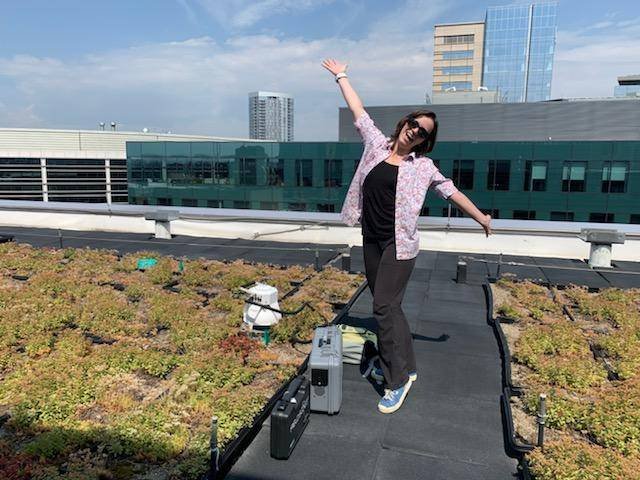
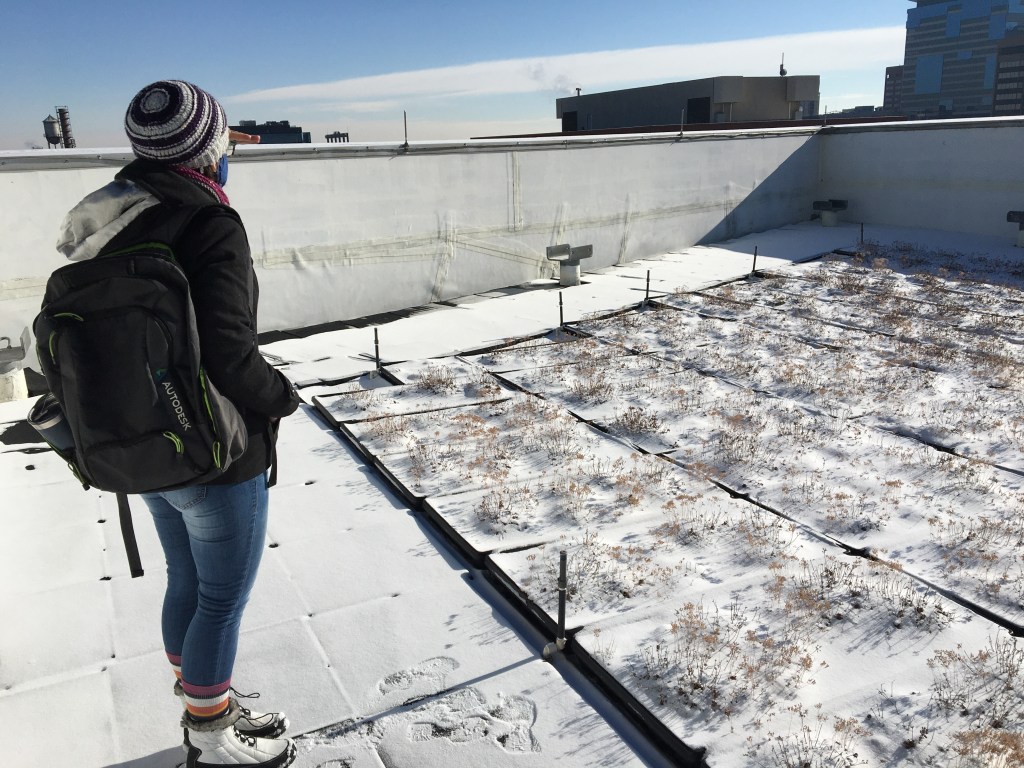
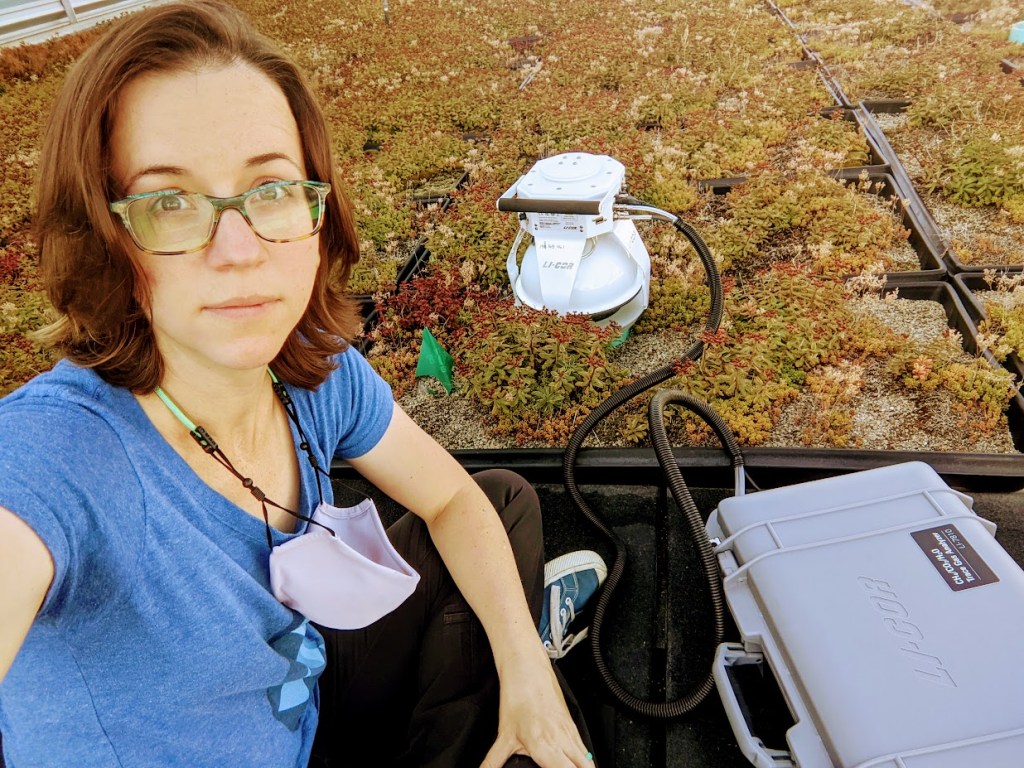
The first one we saw was essentially an extensive arrangement of shallow plastic bins with soil and sedums in them. I guess that would make it modular and easily replaceable if something goes wrong. It’s clever, but probably not as visually appealing, even during the growing season, as something more continuous. The picture I’m sharing here is of the lower roof level. It has some solar panels a couple of decks with chairs. There are floating concrete tiles all around the outside (where I am standing in the picture) and it sounds like employees in the building are allowed to walk around the perimeter on breaks. They also appear to be populated with all one type of sedum, though it’s hard to say since they’re partially covered in snow. They have installed an irrigation system to keep the plants watered. I wonder if they expected to have to water them, though, since it seems that most people expect green roofs to be relatively maintenance-free.

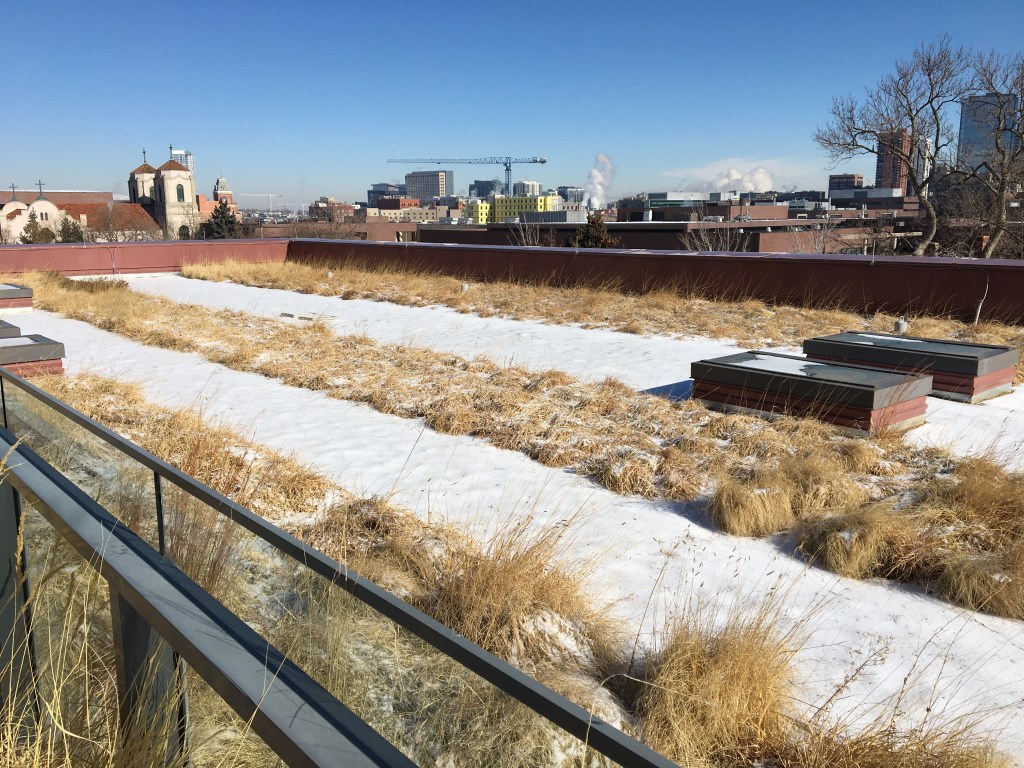
The second roof was directly planted, in a pattern, with various grasses. It’s beautiful, even in the winter, but I don’t imagine it’s very practical. I don’t know much about the physical structure of this roof, but ornamental clump grasses can have roots that grow to more than a foot deep. The maintenance person who showed us around said that they’ve had some trouble with leaking, so I wouldn’t be surprised if the substrate isn’t deep enough to allow that. Additionally, as you can see from the picture, only some portions of the roof are planted. I think the other parts are just gravel. It seems like this patchwork method, while pretty and fun, would diminish the insulating effects that green roofs are supposed to have.

The third roof is my home roof: the one I studied for years during my undergrad. This a roof I feel like I know more about than probably any single other person. But I don’t know everything about it.

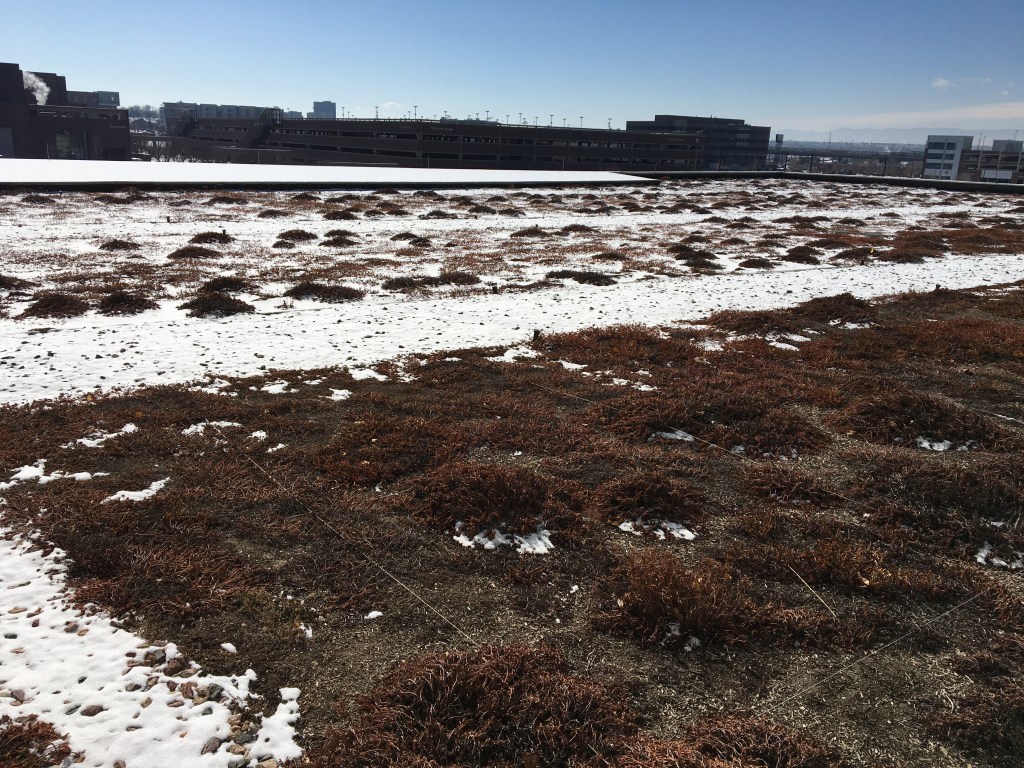
It, like the second roof, has a patchwork design with some areas lacking plants and being covered only in gravel. In this case, I know that building management has complained that it has not lived up to their expectations for insulating the room below it. This roof also has a watering system, like the first roof. I also know that building management has expressed concern about the increased amount of watering and maintenance beyond what they expected when the green roof was installed.

This roof is also populated with sedums, like the first roof. In fact, I think the variety the first roof uses is one of the varieties found here. This roof has around 10 different types of sedums, which makes for varied texture and color during the growing season.

All three green roofs have attractive patios with furniture, which suggests that they were intended, at least in part, to be enjoyed by visitors. But with all the hype going around about insulative properties of soil and plants, reduced rainwater run-off, reduced heat island effect, and improved urban air quality, I don’t imagine providing green space to employees was the only motivation for their installation. I look forward to finding out what the goals were, what the outcomes have been, and how the thing have changed in between. My goal with this project is actually to learn how soil respiration on green roofs is affected by temperature, but I also love talking about practicality and experiences with people who manage these spaces.

I guess you could say that the larger goal of all of my research thus far, and maybe into the future, has been and will be to provide a better understanding of how green roofs really work and whether they are a practical addition to the urban ecosystem.

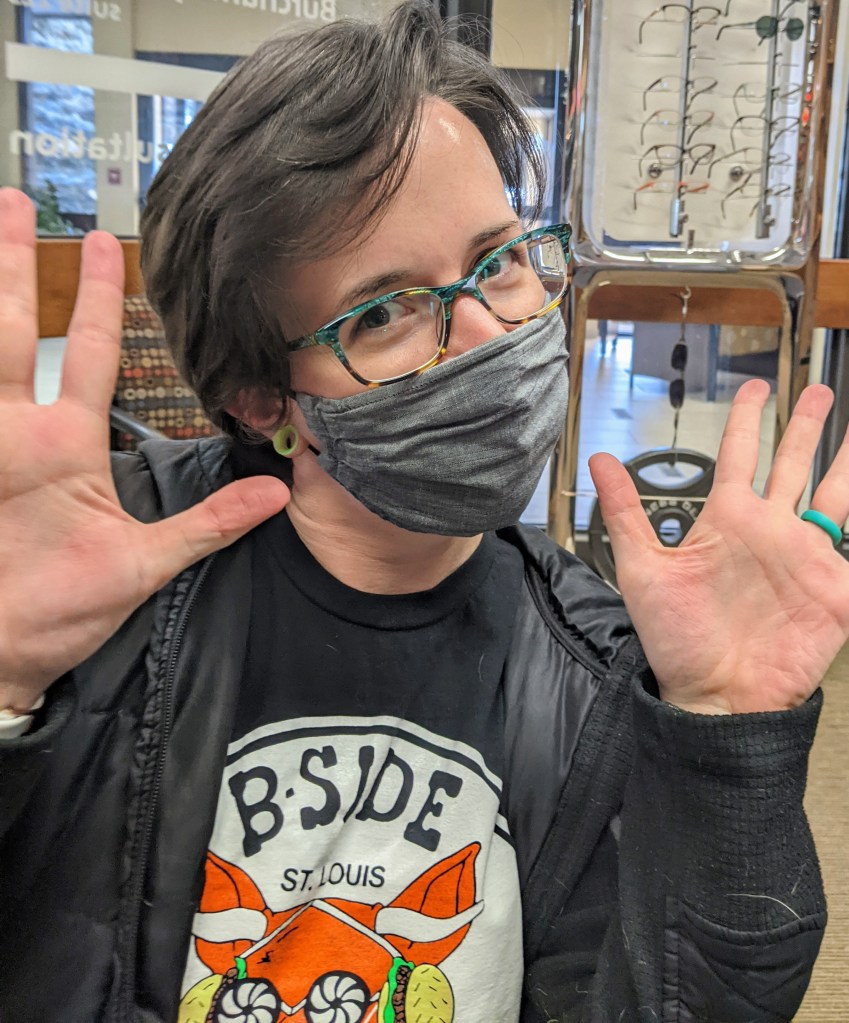
As a side note: the weather was not on my side. Wearing a mask meant that my glasses fogged up. Then, the air was cold enough to turn the fog to frost which had to be scraped off of my lenses. Thankfully, my advisor doesn’t wear glasses and took pictures so I could see things better later.

My experience with ADHD

I recently overheard my MIL telling my husband that she has heard me say that I have ADHD, but she just doesn’t see it in me. My ex-husband has apparently also told our diagnosed daughter that he doesn’t see ADHD or ASD in her. This seems to be a pretty common experience for people observing people like us from the outside.

I can’t recall any previous noticeable instance of someone questioning my mental health experience. Of course, my whole childhood is littered with, “try harder”, “pay attention”, “just do the work”, and “I don’t understand. You’re so smart!” When I was diagnosed, a little over a year ago, I told all manner of people. My mom seems to think it fits with what it was like for her to raise me. My professors, some of whom share my diagnosis, “ooohhh” in that way that means, “everything makes so much more sense.”

Before I chose to share the new information with others, I read some accounts from peers who shared, or chose not to share, their news. So, I was already aware that I’d probably get mixed reactions.

If you don’t see my ADHD, you’re not alone. No one thought it was ADHD when I was a kid, not even me. I just thought I was not trying hard enough, and I was ashamed. I thought I was weird, broken, and destined for failure because I couldn’t figure out how to just try harder, and I wanted to hide it. In fact, long before I graduated high school, I had firmly decided I could never go to college because I was bad at school. I passed almost all of my classes and I did really well on in-class work and tests. I scored in the 97th percentile on a nationwide, standardized test once and my grandpa framed it. But if I needed to take something home or remember to bring something to school, I was practically hopeless. An incredible amount of my mental space was already occupied with simply remembering where I needed to be and when.

Of course you don’t see it in me, though. My diagnosis didn’t come until my 30’s, and I spent all the years before that figuring out how to hide my weirdness. It’s called “masking” and girls are often especially good at it. ADHD is under-diagnosed in girls for many reasons, but one reason is that we turn our forgetfulness into stress and anxiety, trying to compensate for remembering just before the deadline by doing all of the work right now.

In middle school, I had a science project that involved growing sunflowers in different conditions. I chose it in class, when sign-up sheets were passed around months before the science fair. I think I managed to remember to tell my mom maybe a week before the deadline. My flowers really didn’t stand a chance, but I got into hyper-focus panic mode and we went to the store, bought a packet of seeds, some soil, and a few pots, and started the work that night. I wish I could say this was an uncommon situation, but I would guess that I either remembered at the last minute or too late more often than not as a kid/teenager/young adult.

We ADHDers eventually realize our forgetfulness is a chronic problem, so we try to build coping mechanisms to prevent future forgetting… which can look like keeping ourselves up at night remembering all of the things we need to avoid forgetting. Prior to my diagnosis, a counselor told me I should try bullet journaling before bed, so I don’t feel like I have to hold everything in my head. That one tip has changed my life, honestly, even though I do still forget to write things down, forget to journal at all sometimes, and almost always forget to check the list during the day. I’m just more likely to remember something I wrote down, even if I don’t remember to check the list.

I spent my whole life, until the last few years, trying to be like everyone else and ending up suffering and hating myself because I couldn’t. My first marriage failed in part because of my undiagnosed ADHD. I was so willing to accept blame for just about anything, because I saw myself as broken. I always assumed that if someone forgot something or was misremembering something, it was me. I turned every mistake into a reminder to “try harder”. My ex got far too comfortable pushing that button. For example, I once forgot to bring baby food on a trip to the grocery store… where we could just buy baby food. He lost his temper, and I felt ashamed and added this to my list of motivations to try harder to seem “normal”. Eventually, the list became so long it was overwhelming and the pressure I felt to seem “normal” caused me to collapse.

Admittedly, there were many things wrong with that relationship. My undiagnosed ADHD only contributed to what I now see as the inevitable crash. The beginning of our protracted divorce was a decade ago at this point, and I’m still recovering from the somehow unexpected collapse of my precarious tower of coping mechanisms. It took many years for me to pull my self-esteem out of the resulting pit.

When I heard my MIL say she doesn’t see it in me, I guess I could (should?) have taken that as a compliment. I guess I succeeded, right? I passed for neurotypical. Instead, I cried and became physically upset because she doesn’t see a critical part of who I am, because I have worked my whole life to hide it, at the expense of my own physical and emotional well-being. I “pass” because I’d rather suffer internally than ask anyone else to “deal with” my ADHD.

I doubt she meant to suggest that she doesn’t believe I have ADHD at all. I’m not angry with her, I’m just deeply sad about how much of my life was spent feeling broken and unacceptable and trying to hide it so other people wouldn’t be inconvenienced by me. I’m frustrated by the years I spent not knowing that my “weird” has a name, and lots of other people are fighting the same battle so it’s hardly even “weird” at all. I’m disappointed that I spent so long not asking for the help I needed because I believed I shouldn’t need help. I spent over 30 years just trying to seem “normal”… and it worked.

This all sounds pretty dark; I know. Let it be known: I’m better now than ever before. I know what my brain is dealing with and I know how to ask for help. I know more about what is helpful, like breaking my thesis down into smaller, more achievable goals with shorter deadlines, bullet journaling even if I don’t look at it during the day, weight lifting and jumping rope, and tea. I used to think I couldn’t handle college, but I graduated with honors and I’m working on my master’s.

I’ve realized that I’m really quite good at scientific research because it has so many unique parts. When I get tired of reading other people’s articles for background research I just have to remember that when I’m done with this, the task will change entirely and I’ll be out collecting my own data. Then, I’ll be doing statistics and analyzing data. Then, I’ll be writing a paper. Then, presenting my findings. It never gets old because it’s always changing.

Most importantly, I’ve met people who are successful who are like me. Representation matters. I know that phrase is usually applied to groups like women, people of color, and people with disabilities. It was also true for me. To see people with PhD’s who couldn’t manage a schedule, were always in a rush or late or overcompensating for their propensity for lateness by being early, whose offices are cluttered, whose spouses bring them things they forgot on a regular basis, and who couldn’t manage to keep a conversation on track because there are far too many interesting, unrelated things to talk about… made me feel like I could be successful, too, even if it did make my undergrad research take a lot more of my time than it should have.

I learned about fountain pens, boy scouts, competitive swimming, the highest point in a bunch of states, diabetes, growing up adopted, great pyranees dogs, a heap of awesome children’s books, sustainable shoe companies, vegan cheeses, and an abundance of other extraneous topics while I was trying to work with said “people with PhD’s” on my green roof plant and soil research. It’s likely I learned less about that roof than I did about seemingly random other stuff. When it comes to my education, my cup runneth over. I learn so much more than what is in the text book or lecture because I have and enjoy these tangential conversations.

Don’t worry about me. I’m thriving, now. Or at least, I know how to thrive once this pandemic stops holding me back!

Now, if you’ll excuse me, I made myself a cup of hot tea two hours ago and just remembered it’s sitting in the kitchen.

School and More School

Today was the first day of the second semester of my grad school program. That’s a heck of a sentence. I’m taking two masters-level classes, working part time for one of my professors, homeschooling all four of my kids, and trying not to fall apart. With dentist, doctors, and various therapy appointments… I have described this situation like this: “my calendar looks like I tried to sweep confetti out of the carpet with a fork.”

Again, I find myself endlessly thankful that my partner has a pretty flexible work schedule and a can-do attitude. However, even if he takes someone to an appointment, I’m still not free to get something else done. Someone has to be available to to kids as much as possible, to help with their school work and keep them on track.

So far, I’ve also been lucky enough to be able to do all of my work from home; but that’s about to change. I’ve done a huge amount of background research on soil respiration over the last few months, and secured access to three green roofs in the city. It’s coming time to schedule visits to the roofs I’ll be studying, so I can figure out how they might compare to each other, and to more typical green spaces in cities, so I can formulate a solid research question. Of course, that leads into actually collecting data on the roofs, which seems like it’s going to require all kinds of scheduling miracles.

It might not sound like it, but I’m quite excited about all of this. I’m just worried about how it will work out under the current circumstances. If you’ve been reading this blog, I’m sorry I keep saying this… I didn’t expect all of this pandemic-related chaos when I applied to grad school.

Since Christmas break, the two younger kids’ Montessori has been even less helpful than before. I talked with the principal before break to explain that the “synchronous work” isn’t something we can do. Both Montessori kids have ADHD, and one also has ASD. They aren’t good at the sitting in front of computers while a teacher talks at them. In fact, the virtual classroom situation was extremely upsetting and disruptive to both of them. But I also explained that we love doing the “asynchronous work”, when a teacher posts instructions or worksheets we can do away from the computer.

To be clear, this was not, by far, the first time I had had this conversation with people at the school. I had already talked to all of my kids’ teachers, and various other school employees about this problem. Still, I thought that talking to the principal would maybe help. Instead, there are no longer any truly “asynchronous” assignments available. What is expected to be done asynchronously now consists of something like, “remember the directions I gave you during our video session” which leaves us with nothing.

So, I’ve given up. If they’re providing nothing my kids can do, then we will just do nothing (for the Montessori). Keep in mind that I have an entire curriculum planned out for them and they’re tracking the expectations of their respective grade levels just fine. I’m just tired of having to ask nicely for people to consider giving written instructions for my kids when I’ve already reached agreements with teachers about how we’re approaching pandemic schooling.

On a happier note: I formed my thesis committee, and it includes one of the professors I worked with when I wrote my undergrad honors thesis! I’m excited to have both new and familiar people to guide me through this. I’m also excited to have a half female, half male committee, because I know it will be easier for me to believe I can succeed if I can look to other women who already have.

Just over a year ago, I was presenting my undergrad thesis, explaining the plant success and soil nitrogen gradient I found on one of the green roofs on which I’m about to study soil respiration! It’s still amusing to look back and remember that when I started my undergrad, I was confident I wanted to study bats as disease vectors. Then, my Bio 2 professor changed my path with his inspirational passion for plants. Then, my new-found love of botany lead me to my first research project, assessing plant success on the university’s green roof… which lead to questions about the soil. Now, I might just be a soil scientist. Oops.

Other important updates I’ve probably not mentioned in other posts:

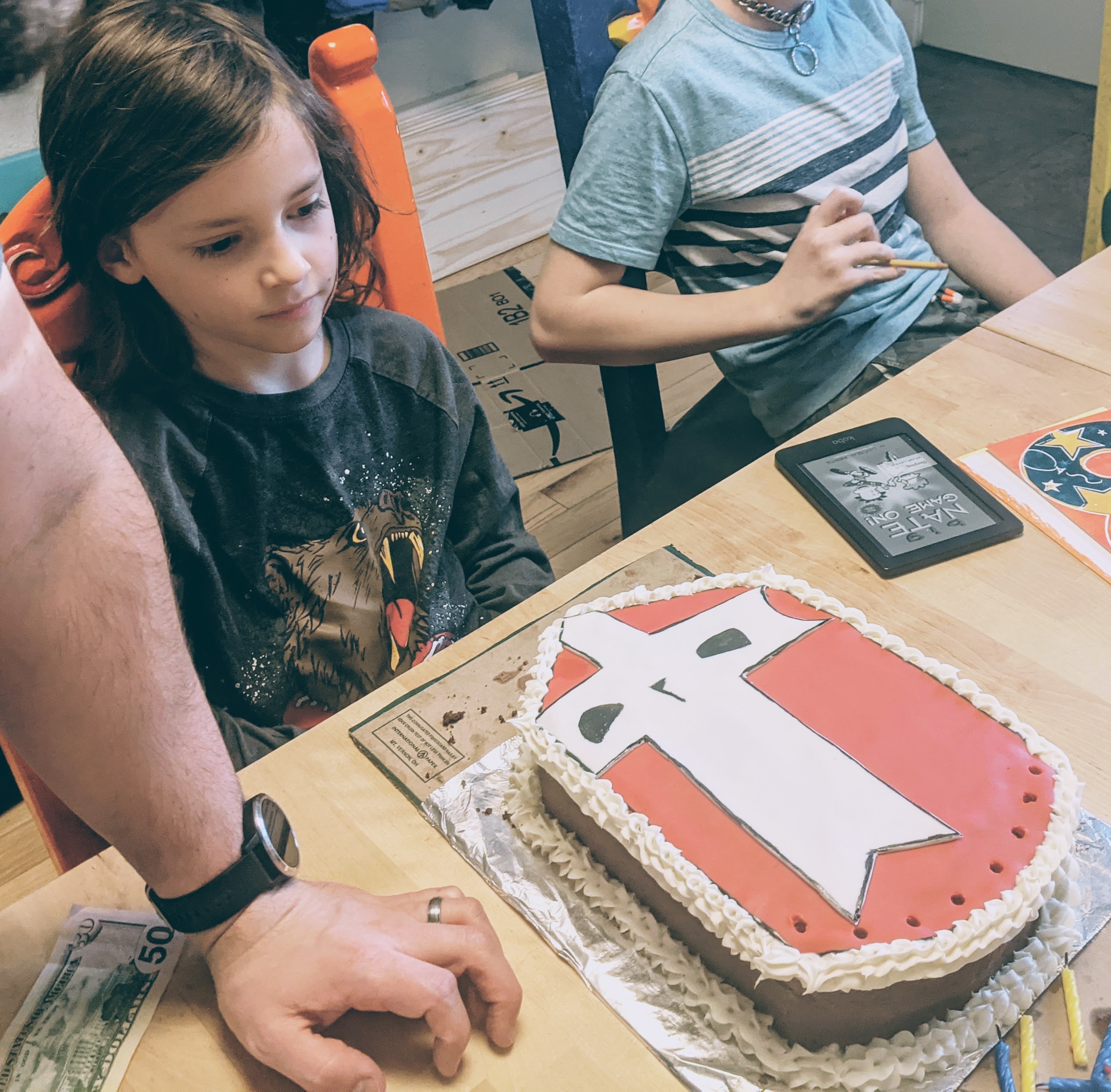
  • Cub turned 8. His party was postponed substantially while we waited for a weekend when we could have everyone here. It’s weird to think, he’s been able to walk since just after his first birthday… and I’ve been trying to get him to stop running in the house ever since.
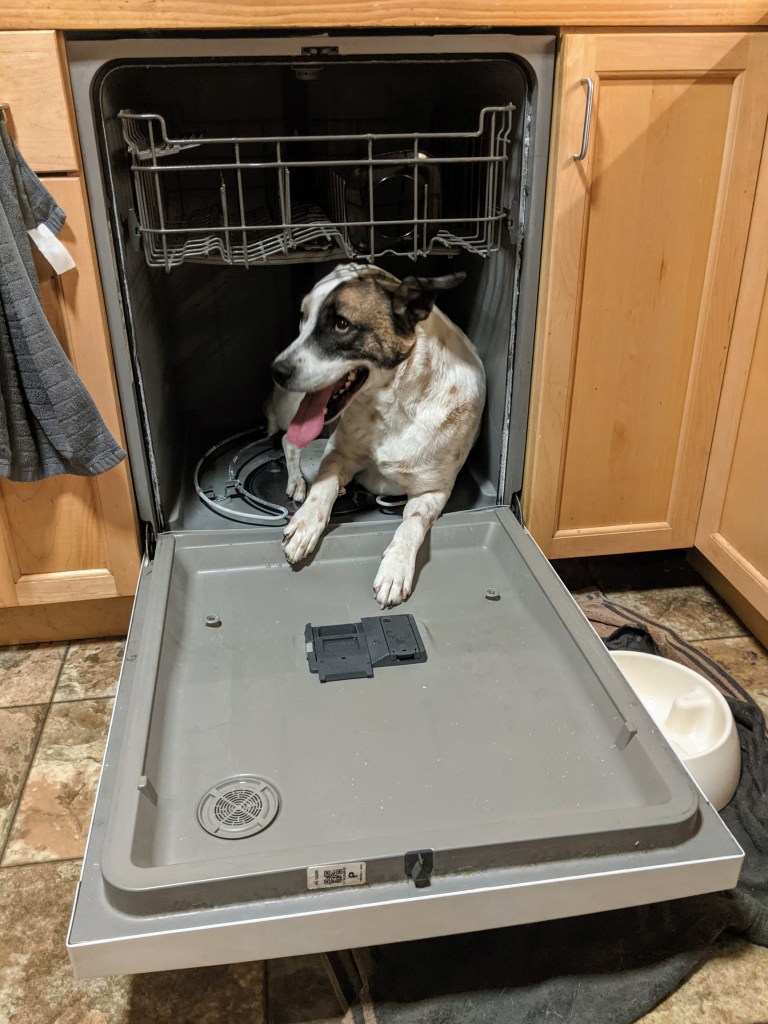
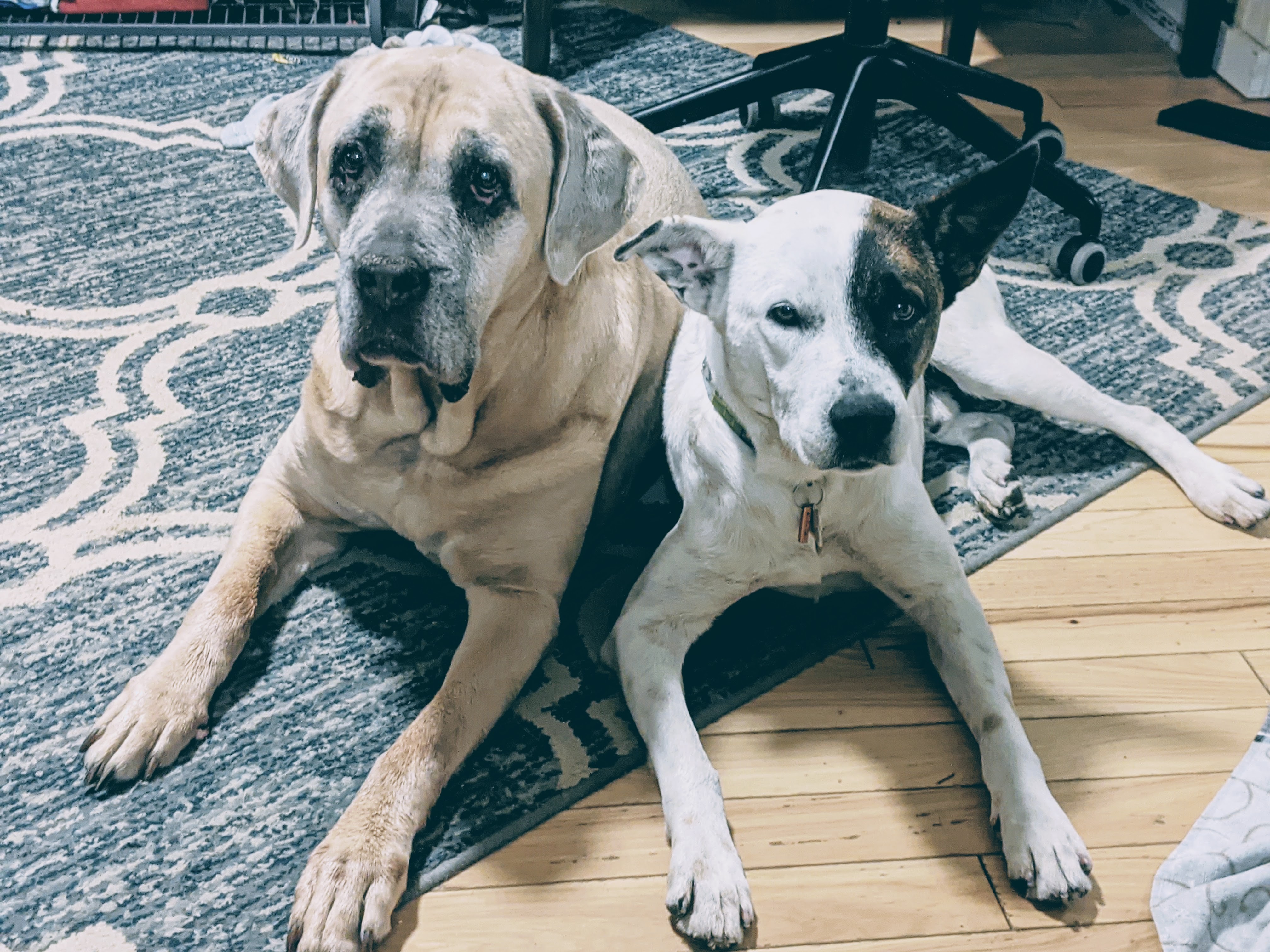
  • We adopted a dog. His name is Zuko. He’s an adorable stumpy-tail cattle dog mix and he’s always looking for attention. He also seems to be very attuned to people’s emotions, which I love.
  • I stopped taking Adderall because the nightly crash ruined my sleep. I might try something else eventually, but I can’t really afford to chemically mess with my brain right now.
  • We’re currently taking a break from the remodeling. The office is complete, the bedroom separation for the twins is complete. The back room (where the TV and the gym equipment are) is complete, except we need to paint. Next up is the master bedroom. I am not looking forward to that bit, but it needs to be done because the attached bathroom had a leak into the wall between the shower and the bedroom that caused some mold and decay.
Design a site like this with WordPress.com
Get started